Cosmic Medicine
Questlove’s new documentary on Earth, Wind & Fire explores the band's radical attempt to heal a broken society with universal funk.

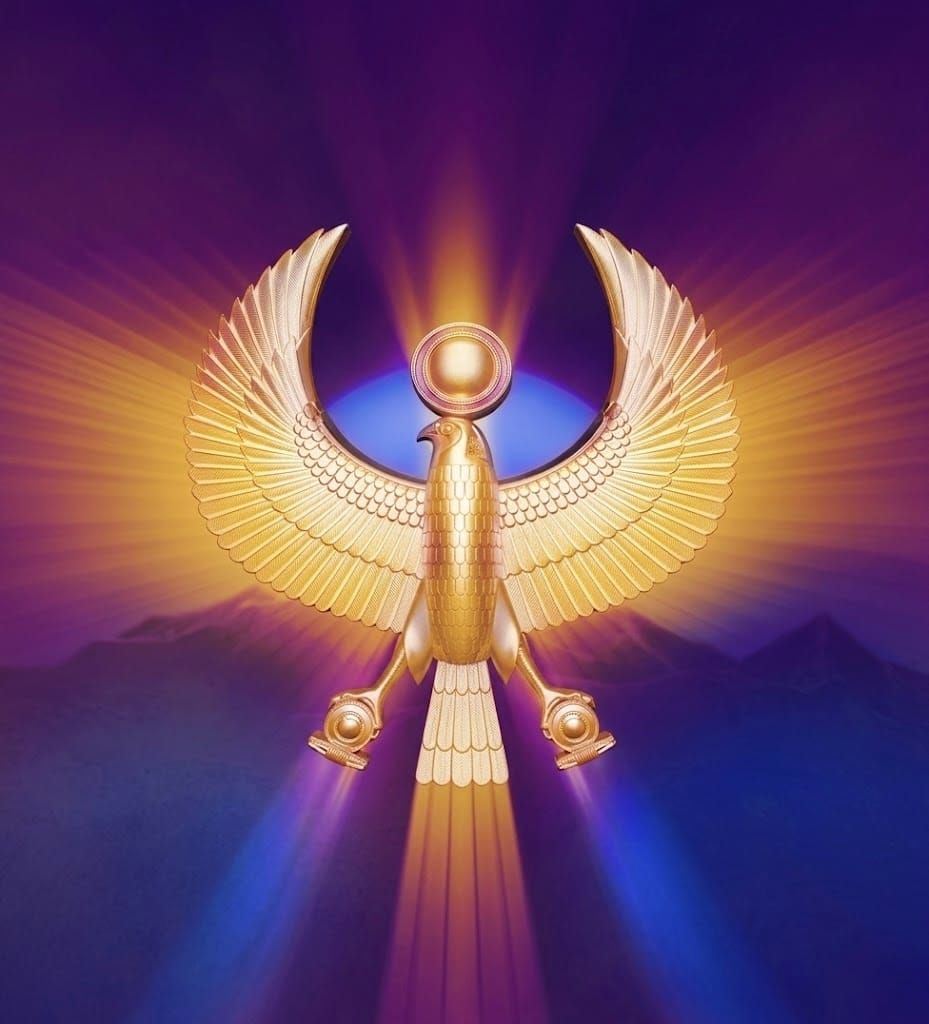
The other day, I watched Earth, Wind & Fire (To Be Celestial vs That's the Weight of the World), the new documentary from musician and filmmaker Questlove, now streaming on HBO Max following a Tribeca Festival release in June. Like his prior film, Summer of Soul, a stirring account of the 1969 Harlem Cultural Festival, Questlove’s latest is worth your time.
I grew up with Earth, Wind & Fire in the background of everything in the late seventies. Recently, I played That’s the Way of the World while our nine year-old worked on an art project. Toward the end of the record, she asked who we were listening to. “Earth, Wind & Fire,” I said. “Oh yeah,” she replied. “They do ‘September,’ I love that song.” Which is not even on that album. She knew it from Trolls.
Questlove’s Earth, Wind & Fire is more or less a music documentary. It’s also about the attempted spiritual unification of the human family—the singular mission of the group’s leader, Maurice White. His relentless pursuit of positive reinvention was informed by his own struggles as a young Black man in America. Yet White wasn’t merely chasing crossover success to satisfy his ego. He saw mass popularity as a vehicle for his message. “We live in a negative society,” White said. “Most people can’t see beauty and love. I see our music as medicine.”
White’s aim was threefold: music for a universal audience, the evolution of consciousness, and changing the world. Easy enough, right? Probably not. But there’s a great deal of exuberance, joy, and humanity in the attempt.
Earth, Wind & Fire came together when Black spirituality was being reclaimed with an eye toward its evolution; the band was one ripple in a longer current. The fount was Chicago’s South Side in the 1960s, its own Renaissance some thirty years after Harlem’s. White was on the scene as a working drummer, soaking it all up.
The band’s first incarnation had roots in pan-African and experimental jazz, a vocabulary traceable to the Association for the Advancement of Creative Musicians, co-founded in 1965 by Kelan Phil Cohran, a trumpeter in Sun Ra’s Arkestra. Even the kalimba (mbira), a key Earth, Wind & Fire texture, came from Cohran’s electrified version, which he called the Frankiphone. And so, one can trace a colorful line from Sun Ra to Cohran to White.
Cohran’s Afro-Arts Theater was explicitly spiritual, bringing vegetarianism, astrology, and world religions to the South Side, nestled within a syncretic Africanism. This lineage was seeded by Sun Ra, who fused Egyptology, Black nationalism, and the occult, and whose visions of flight and freedom would later be called Afrofuturism. Look at EWF album covers and you’ll find plenty of pyramids and ankhs along with space motifs. All received theology from Ra.
What made the movie for me, beyond the music, was the human beings in it. Barack and Michelle Obama talk about Earth, Wind & Fire like a couple of teenagers. Barack speaks from the heart about how much the band mattered to their courtship. I miss leaders who are human, who have a genuine relationship to art and culture. It’s a harsh contrast with the grotesques we have now, who have no appreciation for any such thing.
I was also glad to see the legendary producer and inventor George Massenburg, with whom I shared several public talks about music and technology alongside the late Sandy Pearlman.
Back to the space connection. Sun Ra is the obvious ancestor, but I also think of Longchenpa in the Himalayan traditions. It’s tempting to dismiss “earth, wind, and fire” as New Age trifle, yet those elemental energies (plus water!) are considered by some Indigenous peoples to be the essence of all that we behold. For those attuned, such energies point to a space from which the cosmic funk arises. White believed music was a key to that space, one that could heal and harmonize the human family.
That vision came with a cost. White was exacting and not always even-handed. The film doesn’t shy away from that, suggesting that his drive toward unification was likely fed by an early absence of it—an aspiration he couldn’t always reconcile with reality.
Whether or not White succeeded in his mission, the idea of connectedness—and what music offers us in experiencing it—remains an ever-present possibility even at this late hour. The more joyous, the better.