Dolly Parton, Bodhisattva
She made generosity look like the most natural thing in the universe.

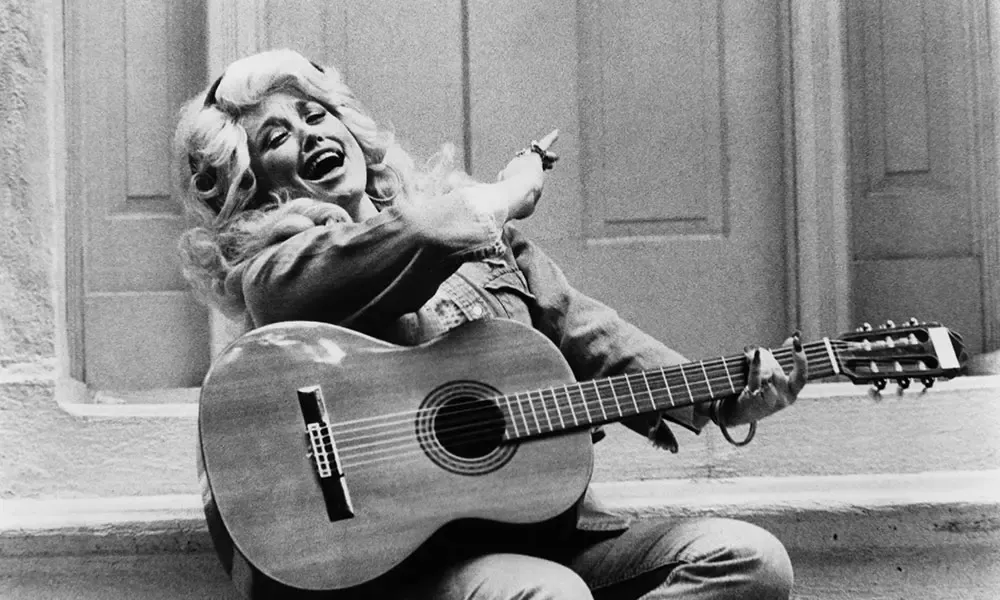
After news broke that the great Dolly Parton had passed away, I saw an update from my friend Leesa that simply said: “Dolly Parton was a bodhisattva.” I thought about that, and then I thought about it some more.
I’m certainly not the guy who gets to confer such a title on anyone, but it seemed worth examining. From her attitude to her actions—which were sometimes unconventional, but always seemingly motivated by a compassionate, open heart—Dolly exhibited many characteristics we associate with that term.
But first, what even is a bodhisattva? The word gets translated different ways, but one I like is “hero of enlightenment,” which already gives Westerners a somewhat Jedi-like association. In Mahayana Buddhism, bodhisattvas benefit beings through spontaneous compassion because they’re no longer particularly attached to concepts of self or even “beings.” That doesn’t mean beings don’t experience suffering and the challenges inherent to embodiment. So where does the motivation come from? Naturally arising, unbounded compassion.
But back to Dolly. Sometimes when people are generous or altruistic, there’s a performative quality to it. Giving becomes something we do to purify our own negativity, demonstrate virtue or fulfill the moral obligations that come with wealth and influence.
Dolly was different. She genuinely regarded giving as pleasurable, even joyful. When she received the Carnegie Medal of Philanthropy in 2022, she described her method simply: “I just give from my heart.” She saw needs she was capable of meeting and responded to them.
If we want to look at Dolly’s altruism, there’s quite a list. The Imagination Library is a personal favorite. When our kids were little, we used to get those books in the mail, which was always exciting. Dolly founded the program in 1995, inspired by her father, who couldn’t read or write. She saw how illiteracy had constrained the life of a man she regarded as extremely intelligent.
Rather than create an abstract literacy campaign, Dolly mailed kids books. The program began in Sevier County, Tennessee, providing a free book every month from birth to age five. It eventually expanded internationally and has distributed more than 300 million books. Dolly said her father was prouder of children calling her “the Book Lady” than of her fame as a singer.
Even before that, she addressed the problem of kids quitting school with the Buddy Program. Seventh and eighth-graders were promised $500 if they graduated—but their designated buddy had to graduate too. The program dramatically reduced the dropout rate from roughly 35 percent to 6 percent. The ingenuity is admirable: don’t lecture kids about education. Give them an incentive that makes them responsible for one another.
After the 2016 Great Smoky Mountains wildfires, Dolly gave people cash money, no strings attached. Families who lost their homes received $1,000 a month for six months. After Hurricane Helene in 2024, she personally donated $1 million to East Tennessee relief, with another million from her businesses and foundation.
That geographic aspect seems significant. Instead of escaping poverty and occasionally writing checks back home, she put a major business enterprise there. More than just a kitschy theme park, Dollywood became an economic engine for the entire region.
And in these days of bullshit persecution of public-health officials, it’s worth remembering that Dolly helped fund the Moderna COVID vaccine. Then she publicly got vaccinated while singing “Vaccine” to the tune of “Jolene”—some saucy public-health dakini activity. She later gave Vanderbilt another $1 million for pediatric infectious-disease research. Put that in your wormhole, RFK Jr.
There’s plenty more. She promoted AIDS awareness when most of country music wouldn’t go near it. She invested some of the enormous royalties from Whitney Houston’s cover of “I Will Always Love You” in a predominantly Black Nashville neighborhood. She paid for scholarships and quietly supported people and institutions around her community. You never knew where Dolly might show up with some money, a smile and probably a quasi-raunchy punchline.
That last part matters too. Dolly was always in on the joke, particularly when the joke was Dolly Parton. She made people feel good and relaxed, and when people relax, quite a bit of suffering falls away on its own.
All of this is on top of a fabulous career in music, about which plenty of others will write. I’ve lived my entire life with a soft spot for Dolly, especially the early-’80s rhinestone era. “Islands in the Stream” is top-five for me, and sorry, Whitney: your “I Will Always Love You” is magnificent, but Dolly’s original still takes the cake.
So was Dolly Parton a bodhisattva? It’s not my call to make. But if it were, I’d surely put her in the pantheon.