Occult Americana
The Grateful Dead, Harry Smith and the stranger spirits of American music.

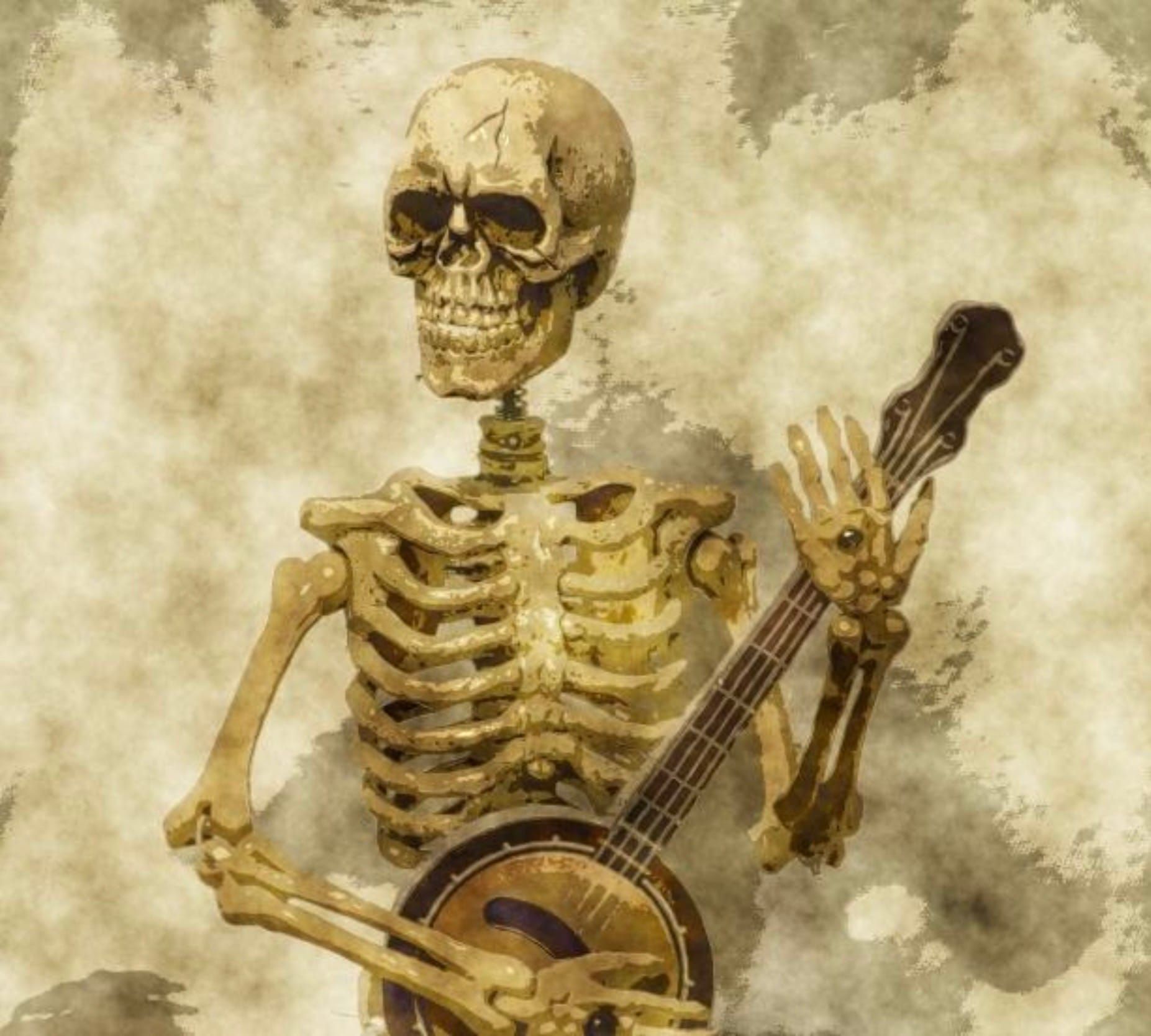
Back in the Before Times, I hosted a podcast called Dead to Me, exploring the Grateful Dead and their unique place in the American imagination. I had three reasons. First, to understand my late-onset fandom and longstanding resistance to the band. Second, to explore cultural intersections beyond conventional rock biographies. And third, because I’m me, to investigate the uncanny, occult and spiritual dimensions of this shaggy behemoth.
At the time, I didn’t know the podcast would become an early stage in the development of Dead Dharma: The Grateful Dead and the American Quest for Transcendence, my book from Oxford University Press, out November 5.
One Halloween episode of the show, “The Evil Dead,” explored the band’s esoteric adventures, including scientific experiments in extrasensory perception. To wit: On February 19, 1971, parapsychologist Stanley Krippner enlisted concertgoers in Port Chester, New York, for an experiment in dream telepathy. A slide appeared with three instructions:
- You are about to participate in an ESP experiment.
- In a few seconds you will see a picture.
- Try using your ESP to “send” this picture to Malcom Bessent.
The randomly selected image depicted a meditating yogi and seven spinal chakras. Meanwhile, Bessent slept at Brooklyn’s Maimonides Medical Center, where researchers monitored his dreams. Co-percussionist Mickey Hart was astonished by what happened:
“When I saw [the image], I said, ‘No way,’” Hart recalled. “No one is going to guess this. And sure enough, [he] had a dream about the spinal column.”
Intriguing results, though insufficient to establish scientific evidence for dream telepathy.
The Dead’s relationship with the uncanny extended beyond psychedelic experimentation. Their musical awakening came partly from an older, deeper well brimming with murderers, ghosts, and unfortunate souls who made exceptionally poor bargains. The main conduit for this macabre and unruly lore was Harry Smith, the mystical polymath responsible for the 1952 Anthology of American Folk Music.
Born in Portland, Oregon, in 1923, Smith was an artist, filmmaker, musicologist and esotericist whose interests encompassed Indigenous ritual, alchemy and ceremonial magic. As I describe him in Dead Dharma:
Though he struggled with addiction, mental-emotional afflictions, and frequent housing insecurity, Smith was a messy, mystical force of nature. With no real use for money, he was driven by direct experience, and he experienced plenty—from street living to institutionalization. Yet if anyone can be called an American mahasiddha, it was Smith.
Smith’s Anthology, comprising eighty-four recordings across six LPs, helped catalyze the American folk revival. Appalachian ballads, blues, religious songs and other archaic transmissions emerged from the grooves. Smith wrapped the collection in alchemical quotations and imagery, presenting America’s musical inheritance as something closer to an occult revelation than a historical survey.
His approach to folk music was both scholarly and intuitive. Smith saw the American songbook as a kind of collective consciousness: plainspoken wisdom rooted in the lived experience of real people in deep relationship with their environment. In compiling the Anthology, he helped preserve cultural traditions while invoking America’s unsettled spiritual interior.
Smith was a strange attractor, holding a near-mystical allure for bohemians, especially Jerry Garcia and Robert Hunter. His Anthology gave them a passageway into what Greil Marcus called the “old, weird America.”
Songs like “Dire Wolf,” “Friend of the Devil,” and “Deal” echo the eerie, elliptical qualities of the Child Ballads, whose themes—murder, betrayal, the supernatural—migrated from the British Isles to Appalachia. The American West likewise looms large: Hunter’s tales of apostates and outlaws, harrowing visitations, and archetypal sorrows unfold against a liminal frontier landscape. Both lyric and melody possess a murky patina—an ancestral wisdom darker than one might expect from an alleged hippie band.
Garcia understood his debt to Smith. When Allen Ginsberg informed him that Smith was struggling financially, Garcia offered an annual stipend of $5,000. Told that wouldn’t suffice, he doubled it. “I owe a lot to Harry Smith for that six LP collection,” he explained.
The supernatural isn’t some exotic addition to American culture. It’s been present all along, lurking in the weirder corners of our collective social memory. The Dead enthusiastically received these strange transmissions, and tracing their sources led me to write an entire book. A perfectly acceptable consequence of having dared to interrogate my own Dead aversion.