Presence Over Pattern Matching
Machines only know suffering by concept. Humans know it by condition. The distinction is crucial for care.

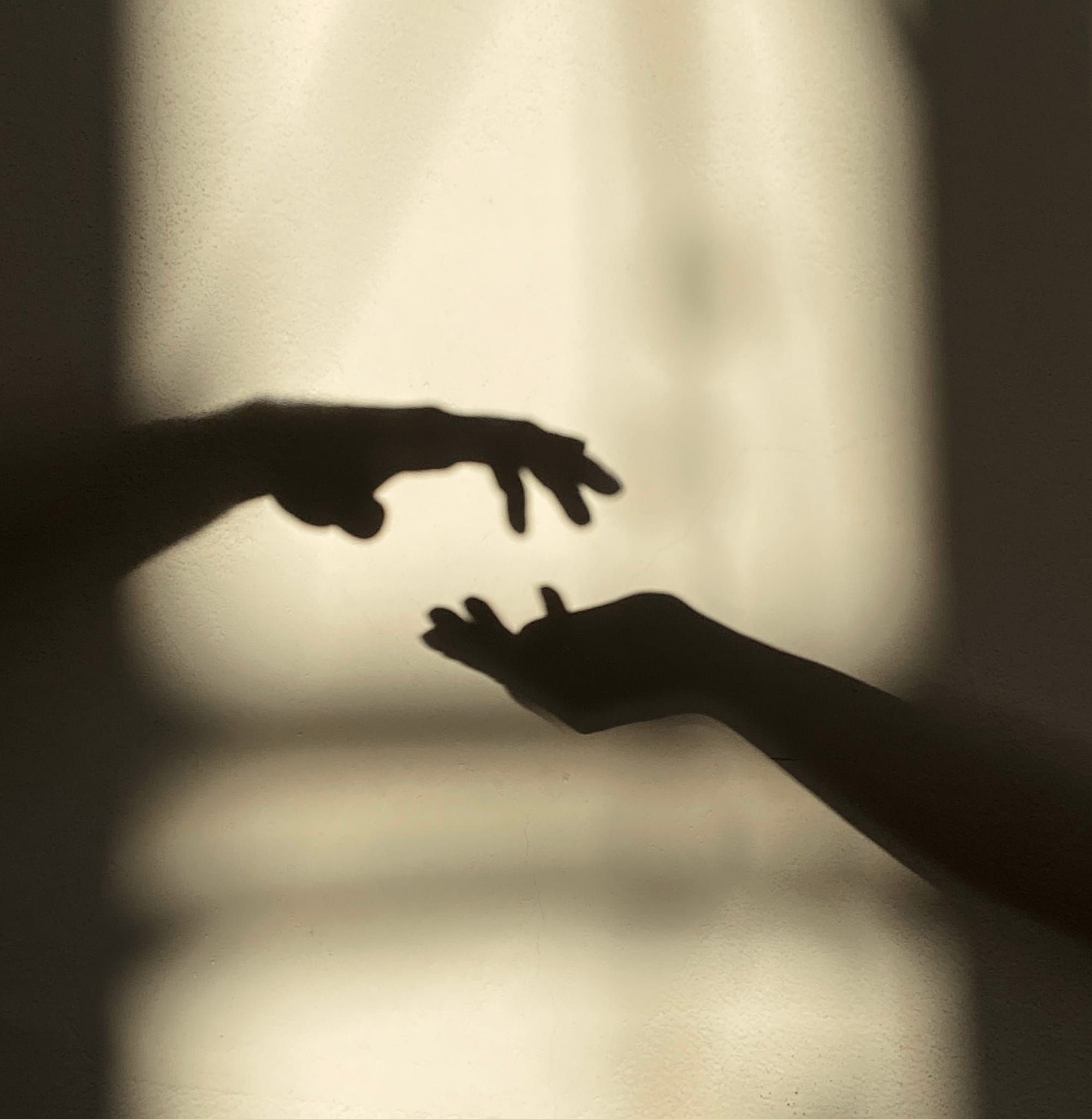
On Wednesdays at Apocrypha we tend to reflect on technological acceleration and what it means for lived human experience. Today, I want to explore the gap between what human-to-human care feels like and what so-called AI can provide. This comes into focus most clearly around suffering.
The topology of human suffering has already been mapped in considerable detail by the species experiencing it. According to tradition, it was one of the core insights of Shakyamuni Buddha, who diagnosed it the way a skilled physician diagnoses disease; not only its causes but a path out of the patterns by which human minds relate to the experiences that create suffering.
The Pali term dukkha is commonly translated as suffering or dissatisfaction. At its broadest, the term encompasses the existential anxiety of being human. It also gets quite specific, and Buddhism has different ways of numbering the sufferings and their felt characteristics.
Though there is nuance to the subcategories, three types stand out. The first is ordinary suffering, which includes birth—intense for the one being born regardless of what it is for everyone else—and then aging, sickness, and death. (The latter often arrives out of sequence.) The second is viparinama-dukkha, the suffering of change. Think of it as the stress of trying to hold on to what is always in flux. The third is sankhara-dukkha, the suffering of conditioned existence. This is the friction of an inner world of thought and emotion that we resist or are compelled by, and an outer world that rarely cooperates with our needs and demands.
Naming these sufferings can spark a sense of familiarity, and that recognition between fellow humans is something a machine cannot replicate, because it does not share these conditions and does not know these sufferings. The whole litany—birth, aging, sickness, death, contact with the unpleasant, separation from what we want, not getting it in the first place—is not a list of complaints. It is a map of how the ordinary human mind experiences itself.
The suffering that feels most alive in the West right now is dukkha-bhaya, the fear of suffering—the suffering that comes from the mere possibility of it. It really winds us up. Then we make panicked decisions, which you can see playing out at scale. Even when it is an imagined future threat, it feels present and immediate. The body doesn’t know the difference. That’s why at three in the morning, when the inventory of terror plays across the mindscreen, the body responds. Over time, those conditioned responses become our worldview.
I’m not discounting individual or collective grief, which is real. Such emotions may not be present in machines, but they are not unique to humans. There is phylogenetic evidence of anticipatory grief in the animal kingdom—elephants, great apes, cetaceans, some of whom memorialize their dead. Within the family of beings on earth is a connection at this level.
What a machine can do is give you a perfect description of every suffering it has access to, then pattern-match on those dialects. But it has no body, no continuity between sessions, and no stake in anything humans experience. It can describe dukkha with clinical precision. It just can’t have it—at least not yet.
A human being sitting with someone’s fear of future suffering brings their own mortality to the encounter; even unarticulated, that shared vulnerability is part of the medium of care. Its not a Buddhist thing, it’s a presence thing. The machine can offer information, round-the-clock availability, a pointer toward reflection—but not from a place of shared knowing. And so the possibility of a heart connection flowing from genuine, non-judgmental compassion—the mutually nourishing manna of presence—is absent.
So the lesson, if there is one, is a question: how attuned are we to our own instrument of caring? How well do we care for ourselves, first and fundamentally? It’s OK to start small and local. And nothing is more local than your own heart.