Running Scared: Wind Season in a Fire Horse Year

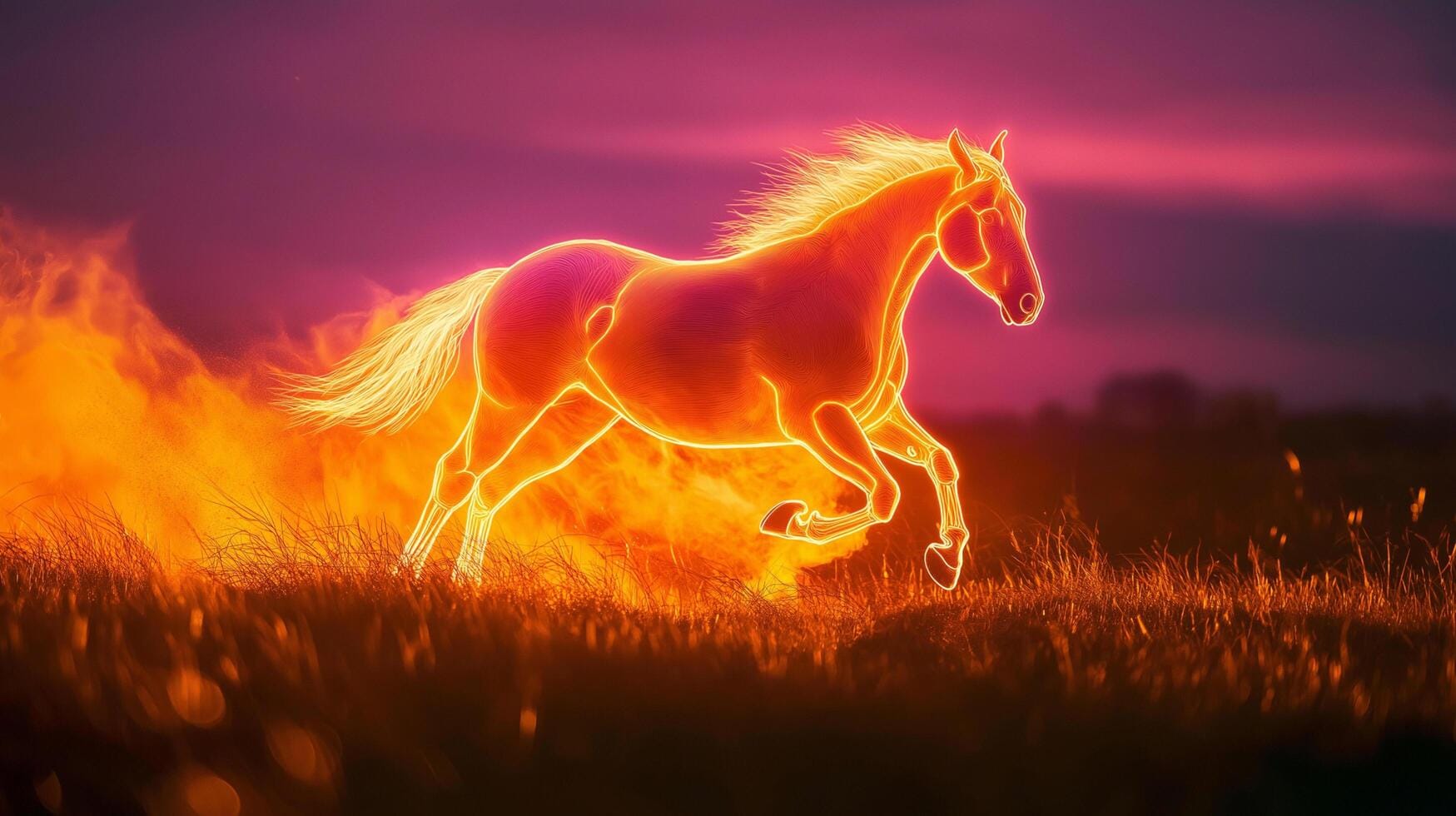
The Tibetan medical tradition has a name for what a lot of us are feeling right now. Loong (rLung)—wind energy, the element that governs breath, nervous system, and the movement of mind—is constitutionally volatile in spring. Add a Fire Horse year, in which flame and wind feed each other, and you have a diagnosis that predates the DSM by millennia. This isn’t metaphor, nor is it New Age; it’s a systems description of a field condition.
Sowa Rigpa, the Tibetan science of healing, understands the elements not as mere symbols but as functional forces with specific indications and influences. Wind moves. It disperses. It agitates. In the body, loong governs circulation, the flow of thought, and yes, breath. It plays a major role in how we experience our own central nervous system. When loong is balanced, we feel clear and mobile. When it’s disturbed, we feel unmoored—scattered attention, difficulty completing thoughts, a nervous system running a program you didn’t install. Sound familiar?
Spring is when loong naturally becomes more active. The earth thaws, stored energy begins moving, and the wind element rises with everything else. This is why spring, for all its associations with renewal, can also feel destabilizing. For most people, the body adjusts. But in a year of ambient collective threat—unresolved wars, shaky institutions, state-inflicted violence, a news cycle designed to keep you scanning for danger—the adjustment never quite completes. The amygdala stays stoked, and the fight-or-flight response, meant to be temporary, becomes the dominant frequency of daily life.
WWI field surgeons called it “shell shock”: soldiers presenting with symptoms that had no clear physical source. Trembling, dissociation, a nervous system locked in alert, unable to discharge. We have a newer name for it now—PTSD. But the underlying condition is ancient, and so is the medicine. Tibetan physicians recognized loong disturbance long before there were trenches. And they didn’t see it as weakness or pathology in the modern sense, but an elemental imbalance within the body-mind.
The Fire Horse year adds another layer. In Tibetan cosmological reckoning, 2026 is a year in which fire and wind are in heightened relationship. Fire feeds wind; wind spreads fire. Fire Horse years are also years of intensity and rapid movement—things that were building reach their threshold. But it means the baseline loong volatility of spring is operating within a context that amplifies rather than dampens it.
In Tibetan Buddhist psychology, mind rides the horse of wind. Loong is the mount; consciousness is the rider. When loong is balanced, the horse knows its rider. When it’s disturbed, the rider loses control—mind goes where the wind goes. In a Fire Horse spring, with collective uncertainty as the terrain, that horse isn’t just spooked, it’s running scared.
The temptation during high-loong periods is to speed up. More input, more analysis, more vigilance. This is exactly what feeds the imbalance. You don’t calm a spooked horse by gripping harder. Wind disturbance in Sowa Rigpa is treated with its opposites—warmth, groundedness, slower breath, reduced stimulation. Of course, the medicine is often the thing that feels most counterintuitive when you’re already running hot.
Contemplative practice during wind season isn’t about forcing stillness onto a scattered mind. It’s about finding the kind of ground that’s actually available. In IFS terms, this is the difference between trying to silence an activated part and getting curious about what it’s protecting. The wind doesn’t need to stop. It needs to know it’s OK to release into the spaciousness that already holds it.
What this outlook offers that straight psychology often doesn’t is a framework for understanding collective disturbance as a field condition rather than an individual failure. You are not uniquely fragile because your nervous system is dysregulated right now. You are responsive. You are living in a Fire Horse spring with loong rising and a world that is genuinely uncertain. The question isn’t how to make that not true. The question is what kind of practice serves a person who is paying attention.
The treatment* is pretty straightforward. Warm food. Good sleep. Slow breath. Less screen. More ground under your feet. And some patience with the wind—which is, after all, also the element of mind in motion, of speech, of the energy that makes anything move at all. It’s not the enemy. It just needs, as we all do right now, a little more tending.
*There are additional treatments within Sowa Rigpa, including herbal formulas, medicinal baths, warm oil compresses (hormé, or Mongolian moxibustion), etc., but diet and lifestyle is often the first and best place to start with loong imbalances.