The Other American Exceptionalism
Cynical conformity wasn’t an option for these visionary outsiders.

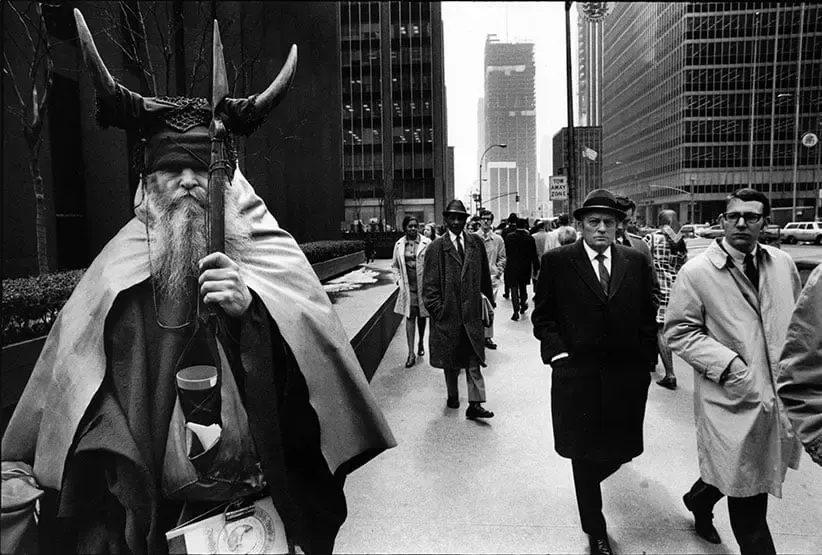
Some Americans don’t seem to fit into that whole America thing—at least the superficial, rah-rah, rock-ribbed version. Many of them tried to, at various points, and encountered the harsher edges of a country that has never been particularly interested in accommodating anyone who doesn’t conform to a very narrow and parochial idea of what participation is supposed to look like. And yet intellectual curiosity, generative nonconformity, and humanistic far-sightedness is as American as anything the democracy-challenged pretenders package and consume as “patriotic.”
Maybe you’ve known a few of these good folks. You might find them haunting the local library or record shop. The neighborhood polymath with a jazz show on the college radio station at two in the morning. They might even teach at the community college—or they did, before cutbacks. And artists, of course. Many are artists. Visionary ones, even. What these folks tend to have in common, besides having to endure the casual cruelty of a society that has no real use for them or sees them as a burden, is their uniqueness—unreplicable by the overlords of technology and finance.
As we approach the 250th year of this republic, with a so-called president doing his level best to make the whole enterprise about himself, it seems like a good moment to bring American exceptionalism back to its originating ground: on the streets, in the hollers, up the mountain, and in all the strange and fertile places where something special can sprout.
To celebrate, here are four Exceptional Americans who embodied these qualities and more.
I call the brilliant and troubled Harry Smith “a messy, mystical force of nature” in my forthcoming book Dead Dharma: The Grateful Dead and the American Quest for Transcendence. Born in Portland in 1923, Smith was queer, addicted, and frequently unhoused—a man of staggeringly eclectic learning who spent years living with Indigenous American tribes in the Pacific Northwest before assembling the 1952 Anthology of American Folk Music: eighty-four recordings on six LPs, wrapped in alchemical quotations and arcane decoration, issued on the Folkways label. A significant portion of a chapter in Dead Dharma traces his influence on the Grateful Dead’s Jerry Garcia and Robert Hunter. When Allen Ginsberg told Garcia about Smith’s later-life poverty, Garcia offered a yearly stipend. When Ginsberg said it wasn’t enough, he doubled it. “I owe a lot to Harry Smith for that six LP collection,” Garcia said. The musician knew his lineage.
eden ahbez is less remembered, but was remarkable in his own right. Born George Alexander Aberle in 1908, he lived under the Hollywood sign and in city parks, promoting raw food before that was a thing, dressing like a figure out of an apocryphal gospel; Jesus with a carrot ginger smoothie. In 1947 he wrote “Nature Boy”—a strange, wandering melody in the Lydian mode with a lyric that reads like a transmission from somewhere outside ordinary time—and delivered it to Nat King Cole through a chain of serendipitous events. The song went to number one for eight weeks and has been covered by, well, everybody. ahbez kept living the way he’d been living: naturally, until he passed away in 1995 at age 86.
Zora Neale Hurston went into the field with a borrowed car and a pistol, collecting Black Southern vernacular culture at a time when the white academy found it beneath serious study and the Black intellectual establishment saw it as backwards. Trained under Franz Boas at Barnard, Hurston documented folklore, music, and speech that would otherwise have been lost—not because real people weren’t living it, but because nobody with institutional resources thought it worth preserving. She didn’t stop at documentation, taking Hoodoo initiation in New Orleans and submitting to weeks of isolation and ritual. The academy had no place for that. She died broke in 1960, buried in an unmarked grave in Fort Pierce, Florida. Alice Walker found her in 1973.
Moondog—born Louis Thomas Hardin in 1916—lost his sight at sixteen and spent decades on Sixth Avenue in Manhattan, composing orchestral music on the sidewalk in handmade Viking gear. Moondog wasn’t cosplaying for clout; he was at his job. Philip Glass and Steve Reich knew what he was up to, as did a small coterie of outsider art enthusiasts and fellow songwriters. Suits expectedly walked on by. Moondog eventually moved to Germany, where more people stopped to listen, and died there in 1999—recognized, belatedly, as a visionary.
What connects these examples isn’t poverty or oddness, though those are certainly part of it. Each was a beacon of authenticity and humanity in the dim fog of conformity, mediocrity, and spiritual stultification. We need more Exceptional Americans like this. Maybe you’re one of them.