The Zen Jock I Walked Out On
In ‘91, I walked out of Point Break during the RHCP beach battle scene. This week I watched the whole thing—and my aversion didn’t make it back to shore.

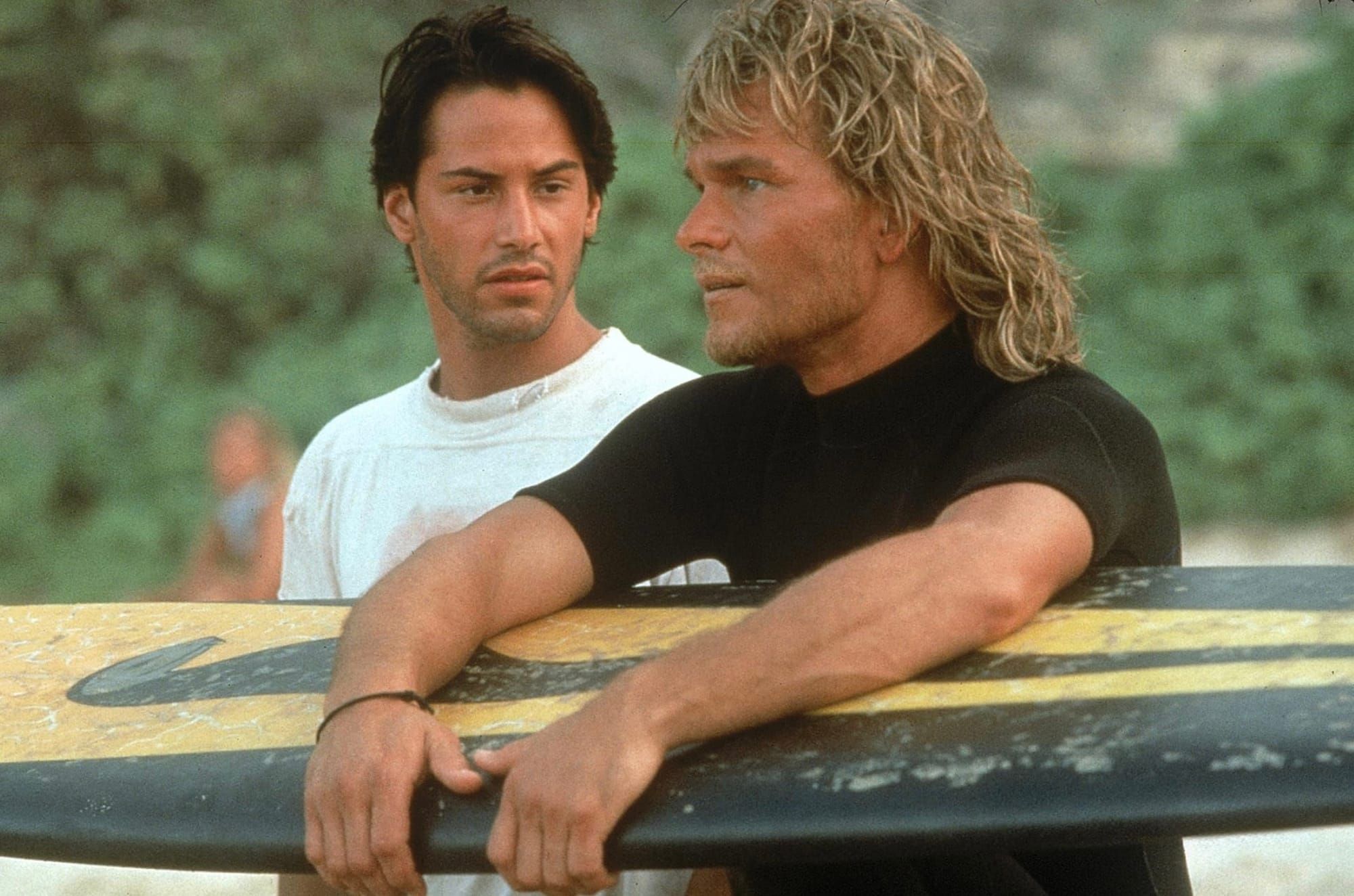
I’ve walked out of exactly two films in a movie theater on first release. Point Break is one of them. I think I bailed during the Red Hot Chili Peppers beach battle scene. Anthony Kiedis in full shirtless warrior mode was apparently my limit. I remember being irritated at the people around me who were visibly engrossed in what I had decided was a complete shitshow. Looking back, I feel some regret about the fact that my girlfriend at the time, who may well have wanted to see how it wrapped up, left with me. I don’t know if she ever got to see the whole thing, but as of this week, I still hadn’t.
The aversion to Point Break doesn’t survive contact with my own taste. To wit, I love Roadhouse. That film also stars Patrick Swayze, and when you look at the two movies together, you start to realize he’s essentially playing the same character in both—the renegade zen jock, a man who operates by a code that is both inscrutable and equanimous. So whatever my objection to Point Break is, it’s not about the genre, and apparently it’s also not about Patrick Swayze. It’s about something more specific, and that could be Anthony Kiedis. Just kidding. Mostly.
My default with stuff like this used to be to snipe from the sidelines or manufacture justifications for my superior opinions on whatever thing I had decided not to like. These days my instinct is more along the lines of curiosity toward my aversions, especially the ones that have gone unexamined for literal decades. So I decided to rewatch Point Break for the first time since 1991. Here’s what I found.
In addition to surprising displays of male tenderness, there’s some spicy generational tension in the dynamic between Keanu Reeves’ fresh-faced Quantico grad and Gary Busey’s gruff, seen-it-all lifer. Now Zoomers have apparently decided that Gen X and boomers are the same generation, which, no.
Busey is in full effect here—he is essentially the prototypical MAGA boomer, except the ground chuck for brains hasn’t yet been hooked up to the Fox News drip feed, which makes him almost likable. That the movie is also stealthqueer is nice irony.
Lori Petty is wonderful and I adore her. A sidebar: Jenny Wright from Kathryn Bigelow’s previous effort—the proto-grunge vampire flick Near Dark—would have been pure adorbs in this role. But since Keanu carries negative erotic charge, she’d have been too much smolder for the dynamic to work.
I originally had a hard time with Keanu’s wooden acting, but some kind of tolerance has built up over the decades, like an immunity acquired against your will.
Swayze was a treasure, and I wish he were still with us. Nobody plays athletic types with so much inborn grace, and it truly seems he gravitated toward philosopher-monk-reluctant warrior roles across his career and played them ably within whatever context the film provided. His character in Point Break is named Bodhi, and it’s worth noting that this is literally the Sanskrit root of the term enlightenment. Which means Swayze was playing a guy named Awakening who robs banks and surfs.
The soundtrack is surprisingly inoffensive; even back in ’91 I was psyched to hear “If 6 Was 9” during the party scene. Hard to imagine anyone playing Hendrix at a youth gathering today. The action set pieces are better than I remembered. There’s some genuinely great surf and aerial photography that I’d previously dismissed as over the top, which it is, but it’s totally awesome.
My friend Alex pointed out something that reframed Point Break for me. Swayze’s outlaw surfer bank robber is trying to reconcile his personal and planetary values with the material necessities of surviving in the system. So he robs banks. It’s a deranged solution, but philosophically coherent. And it got me thinking that this is what happens when the Buddhist idea of “right livelihood” is not available through conventional means.
Back to Keanu, who actually played Buddha. The man has now made multiple John Wick films—hyperstylized, gratuitously violent, and on their surface seemingly misaligned with his public persona. The first couple were entertaining enough, in a Rated M comic kind of way. Still, Keanu seems like the one celebrity where the label actually matches the contents. No reported on-set horror stories or dickishness anywhere in his public or private life; encounters with regular folks consistently go the right way. So it seems like he’s achieved some genuine separation from his jobby-job even as the John Wick money presumably funds the life he wants to live. Alex noted that this puts him in an interesting parallel with Bodhi—similar underlying tension, with a different resolution and significantly less federal heat.
Beneath the goofy dialog and blockbuster action, Point Break is asking a worthy question: how does one live according to their values when the system makes that structurally difficult or impossible? Bodhi’s answer is criminal. Keanu’s answer is: make the movies, try to be a decent human, and don’t become the role.
It’s a pretty interesting set of takeaways for a movie I walked out of in 1991—which means my instinct to get curious about long-held aversions was on point.