Everybody as a Little Kid
Nobody starts out as Lindsey Graham ended.

The comedian Patton Oswalt has a bit on his 2007 album Werewolves and Lollipops about George Lucas and the Star Wars prequels. An adult fan is telling Lucas how excited he is that Darth Vader will be in the new movie. You know, with the big black suit, helmet, and laser sword. Lucas nods along. “Oh, you like Darth Vader? Well in the new one you get to see him as a little kid!” Then once more around with Boba Fett. The fan is psyched, because Boba Fett is the ultimate enigmatic, badass space assassin. Lucas responds enthusiastically, “yeah, yeah—and in the new one you get to see him as a little kid!”
I still think it's a funny routine. But lately, I have been wondering whether there’s any harm in seeing scary badasses—or anyone, really—as little kids.
In Tibetan Buddhism there is a body of teachings called the lamrim, meaning “stages of the path,” which goes back to the Indian master Atisha in the eleventh century. One of its contemplations holds that every being you meet has, at some point in timeless time, been your mother. Contemporary Tibetan teachers will tell you the example doesn’t always take with Westerners, who don’t reliably have good relationships with their mothers. The older version is more inclusive. The Buddha said that in a cycle without discoverable beginning, there is no being who has not been your mother, your father, your brother, your sister, your son, your daughter, etc.
Without contradicting the above, there’s maybe a simpler way to look at it. Every person you meet was once a child. There is a kid in there. That kid may be obscured, but they still have needs. And they can be quite disruptive when nobody listens.
I’m thinking about this now because Lindsey Graham died Saturday night at seventy-one. I find his politics reprehensible. As a person, I find him sad. Ditto the discourse around his death. When a public figure dies these days, the online masses argue over who deserves respect and who gets ridiculed along predictably partisan lines.
They were all little kids. As once were the people fighting about them.
There was a time when I simply disagreed with Graham on most things. He was a fierce critic of Donald Trump, a close friend of John McCain, and a warm colleague of Joe Biden. At some point he embraced his own corruption—at the country’s expense, against some of his own interests, and surely those of a great many South Carolinians.
Have you noticed there were two Graham smiles? One was tongue-chewing, impish, and creepy. The other was actually kind of pretty. When I see the second one, I imagine Lindsey as a little kid. Something happened to that kid to make him feel he needed to align with men like Trump to feel safe, even at the expense of parts of himself. The tragedy is that Graham was not free, and his lack of freedom produced devastating choices, and not only for himself.

Yet I can still see him as a little kid. This isn’t projection, so much as an outlook that became available to me only when I started seeing my own emotions and self-narratives along the lines of small children in need of care.
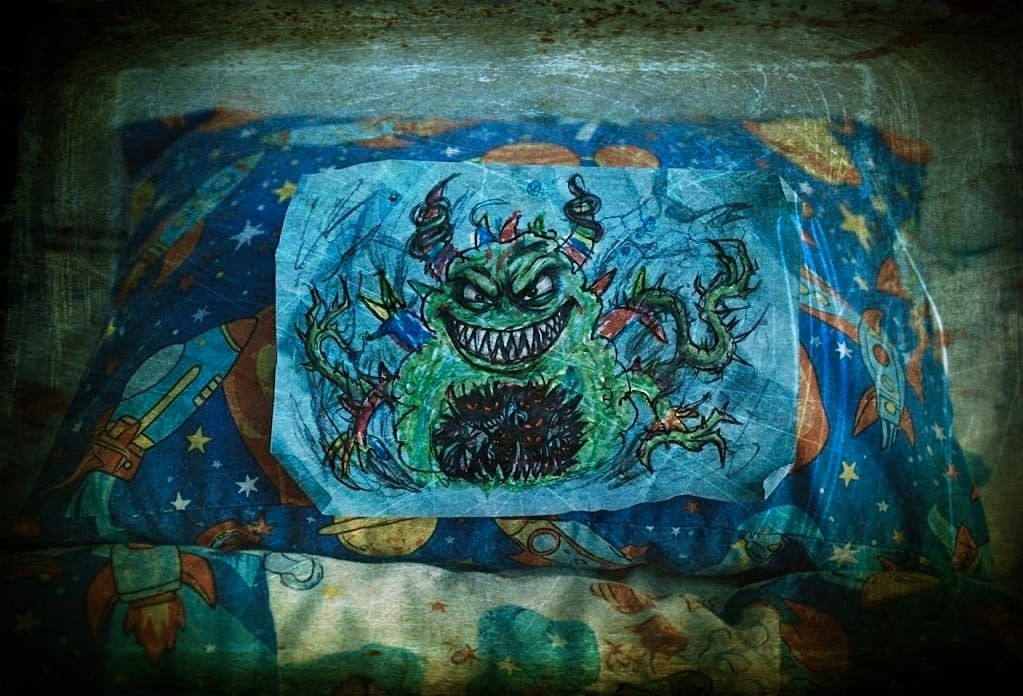
Imagine a kid under five years old. They come running to you with a skinned knee, or story about losing a toy, or maybe a nightmare about clowns. Nobody would say to that kid, “sorry, I don’t do scary clowns.” Most, I think, would offer comfort.
Turned inward, that open acceptance can be the start of healing some stuff. Outwardly, it can help us accept people in their many layers, including hidden sufferings. Somewhere inside them is a kid who developed ways of coping in response to experiences. Sometimes those ways harden into entire worldviews, as it may have been with Graham.
None of which excuses anyone’s behavior. We can hold grown people accountable for their actions. We might also wish they’d had a different life, if only to spare us the agony. The point is that, under other conditions, little Lindsey might have turned out very different. And so might we.
Every action we take produces a result, inside or outside. And we are not always given a choice about the situations we find ourselves in. That's true whether we are children or adults.
And so, even though I oppose everything Lindsey Graham publicly stood for, I don’t mind seeing him as a little kid.