Free to Be Free of Me
When the familiar self goes missing, nothing needs to take its place.

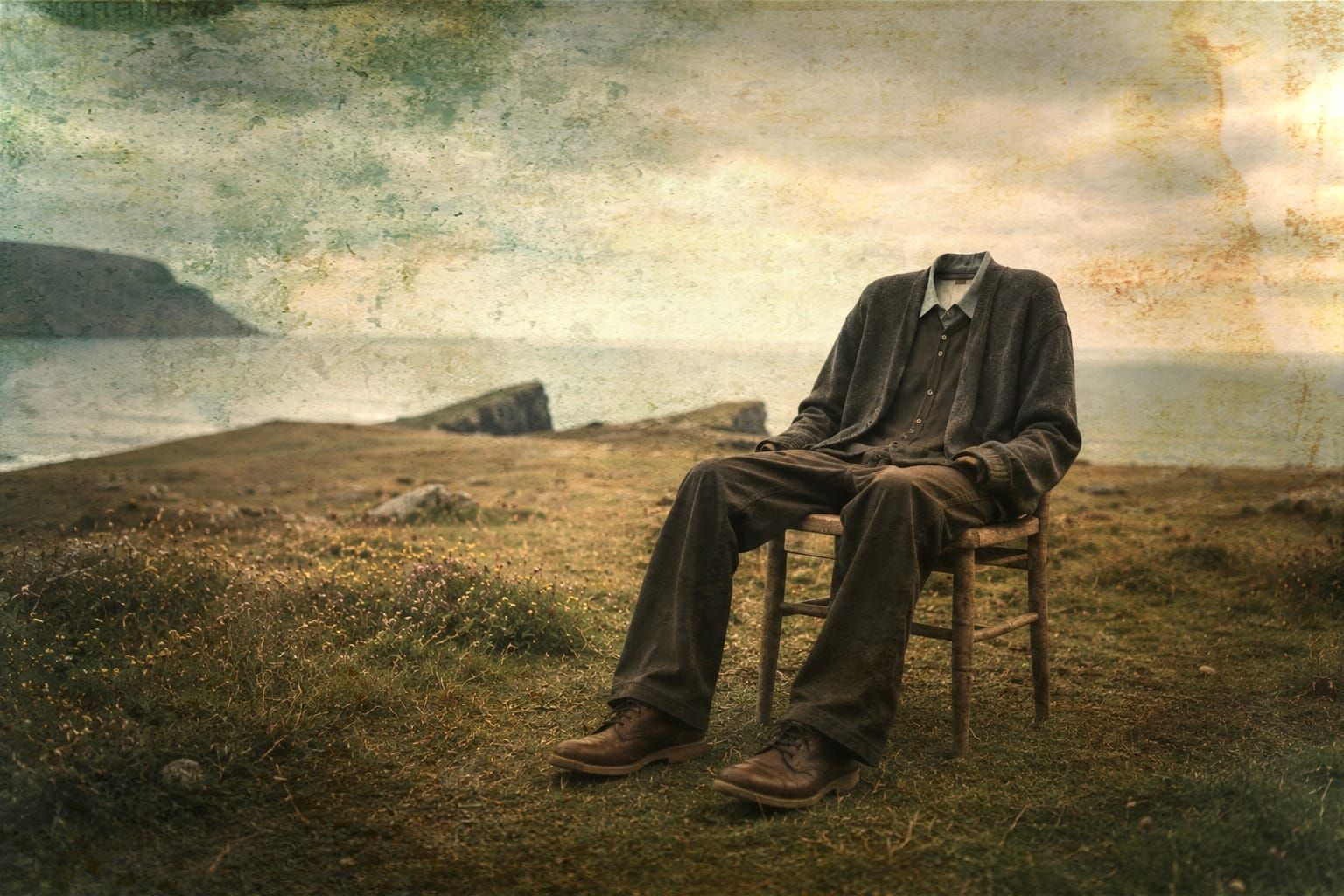
For the last couple of weeks, I’ve been recovering from an illness I’ve written about previously. It came with the usual hallmarks of confusion and disorientation, but perhaps the most difficult thing this time around was finding anything that made me feel like myself—connecting to any authentic sense of enjoyment, or at least benevolent distraction. In such a state, one’s entire sense of being is thrown into question.
This especially interesting when you have some experience practicing acceptance, abiding, recognition and release. There are various ways and approaches to facilitate this kind of thing, which I’m not going to get into here. Suffice it to say that a spiritual practice is as easy as anything else to construct an identity around.
When access to familiar ways of being are temporarily obscured, it can produce a strange rupture in our sense of security. For me, it might sound something like: Geez, what kind of yogi are you? You get a little bronchitis and fall apart? The identity that supposedly knows how to meet experience suddenly finds itself unable to meet experience in the accustomed way, and that produces additional irritation.
There’s nothing particularly unusual about any of this. We’re not alone in temporarily losing access to a secure sense of self, any more than we’re alone in the physical suffering that accompanies illness. The confusion and aversion belongs to the human experience.
I’ve mentioned this to some friends, but I’ll say it here: one thing I’ve struggled with in the Buddhist tradition is the advice to “bring sickness onto the path,” or various versions of that axiom. Illness, we’re told, is a wonderful opportunity to practice. As somebody who is perhaps contrarian by nature, and certainly shaped by an aversion to both the Protestant work ethic and the capitalist mindset, I’ve sometimes heard this as another version of pulling yourself up by your bootstraps: You’re sick? Practice harder.
When we are ill or otherwise compromised, that may simply not be possible. We might not have the energy or clarity to engage in particular practices or conjure the mental state we associate with being a good practitioner. So where does that leave us?
I’ve come to recognize that “bringing sickness onto the path” is actually great advice. Not because illness gives us another assignment to judge ourselves by, but because any unfolding of experience contains wisdom. When we stop fighting quite so hard to confirm ourselves through the experience, what is actually occurring is not obstructed by our insistence that it signify something about who we are.
This isn’t state-dependent knowing. It doesn’t require feeling peaceful, insightful, spiritually accomplished or even particularly coherent. It is the recognition of conditioned co-arising and the lack of intrinsic existence in all phenomena, including the temporary condition we’re desperate to escape. But for that recognition to become accessible, we may first have to stop fighting and flailing.
From there, connection can emerge through deep, compassionate acceptance of our own condition, alongside a broader recognition of mutuality with others who are suffering in similar ways. Just as importantly, the self-constructed need to possess an identity capable of rising to the occasion can begin to loosen. We can be connected without investing absolute meaning in whatever happens to be occurring right now.
I’ve spent a good deal of time examining closely held identities, and I keep finding an interesting point of tension. There are ways of being that feel authentic, but none exist apart from the causes and conditions that make them possible. Having a body, a mind and functioning senses is structurally necessary for the experiences we use to confirm who we think we are. Those conditions are themselves part of the same co-arising that shapes every other aspect of experience.
Radical acceptance therefore has to include however we happen to arise in a given moment, including our tendency to grasp, seek confirmation or establish certainty. A spacious, sky-like mind can recognize even those tendencies as conditioned. They too are free to arise and exhaust themselves within the natural, easeful and unforced awareness that is already present.
If we’re fortunate enough to recover from illness, eventually the familiar faculties return. The things we enjoy become enjoyable again. Our personalities reassemble themselves, our habits resume, and we begin to recognize the person in the mirror. None of this contradicts what we may have glimpsed while those familiar coordinates were unavailable.
That, finally, is what I find beautiful and liberating about bringing sickness onto the path. The point isn’t to become the kind of person who handles illness perfectly. It’s to discover that even the temporary loss of the person we think we’re supposed to be is a kind of freedom. Nothing else is required. What a relief!