Strong Men Also Cry
Forty years after Metallica lost Cliff Burton, metal finally learns to mourn in the open.

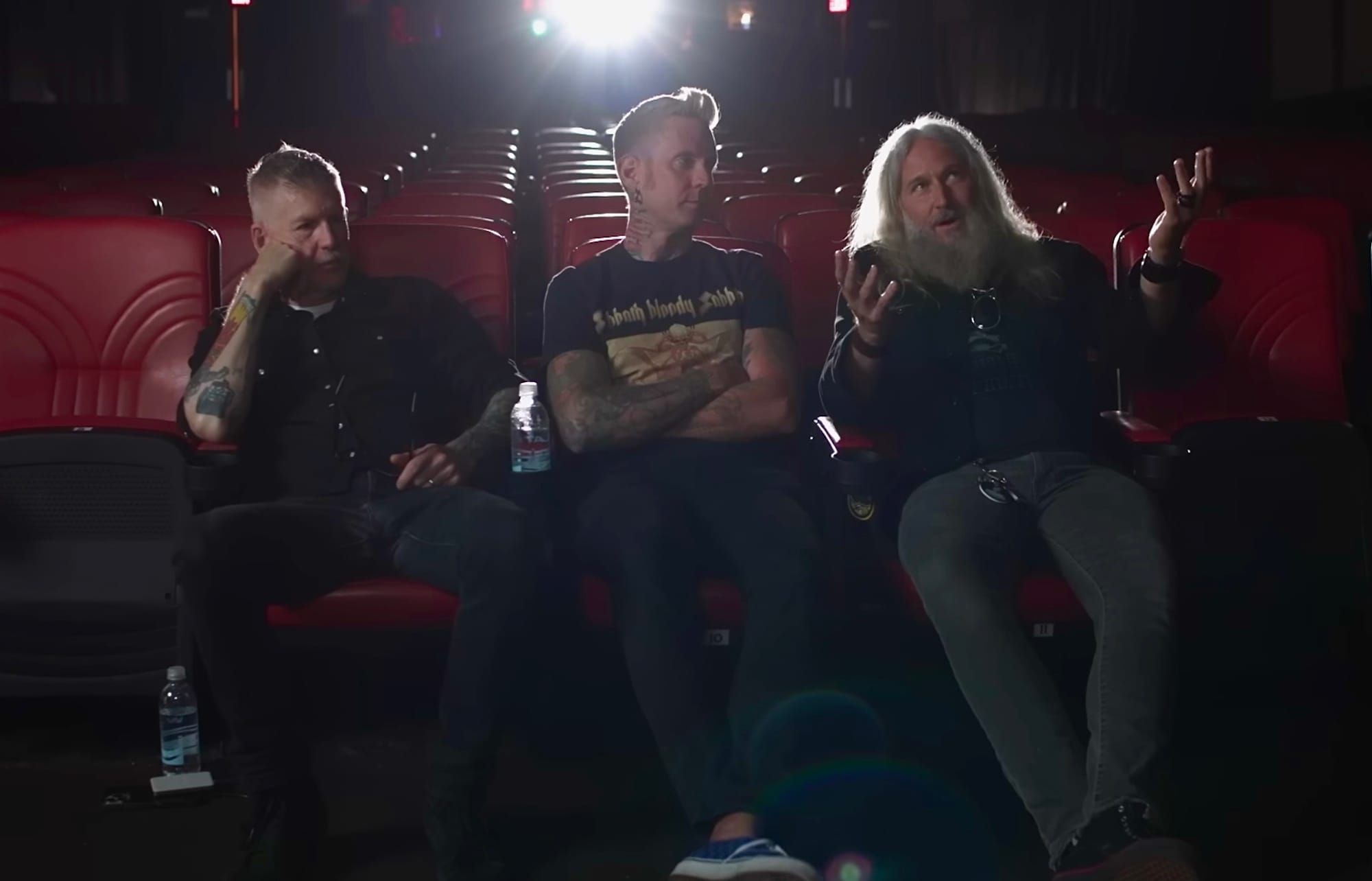
There’s something unusual about seeing three middle-aged men from a worldbeating heavy metal band talk about their shared grief with candor and tenderness. But that’s what happened when Mastodon drummer/vocalist Brann Dailor, bassist/vocalist Troy Sanders, and guitarist Bill Kelliher sat down in a private theater in Atlanta, on camera, to watch archival footage of their late guitarist Brent Hinds—and in doing so, invited their devoted global fan base into a complex range of emotions arising from his loss.
On July 8, they released that footage as a thirty-five-minute film called “The Mastodon in the Room.” I recommend it highly, whether or not you’re a fan of the band. In a world rife with toxic masculinity, examples to the contrary are always welcome, and this is a big, hairy one.
Heavy music—metal, metalcore, hardcore, take your pick—isn’t known for its vulnerability. The culture runs on stoicism and focused release, where Big Emotions are channeled into the riffs or exhausted in the pit. Mastodon are choosing a road less traveled by opening their grieving process in recognition that this loss belongs to an entire community.
I wouldn’t call myself the hugest Mastodon fan, but I’ve watched them since they arrived on the scene. I recognized them as a natural progression of what me and my bandmates were trying to do with heavy music in the nineties—authentic to the spirit of something I was involved in, and at the same time a remarkable evolution of it. Much of that evolution was driven by Brent Hinds.
Hinds was a singular guitarist in heavy music. Raised in Alabama, he came up through country and bluegrass before he even considered metal, and he didn’t hide any of those influences. His hybrid picking style, basically banjo technique transposed to guitar, gave Mastodon a ferociously tumbling quality within the heavy sludge and progressive side quests. Hinds’ compositional mojo bag contained Southern rock swagger and psychedelic weirdness, with a strange dying-cat gargle of a voice that was sweet in its own pained way.
The original lineup hung in for twenty-five years and became deeply bonded in the process. But as Kelliher, Sanders, and Dailor found ways to grow up while still participating in the awesomeness of this thing they loved, their bandmate fell further into alcoholism and was unable to find his way out. “He wanted you to come with him into the abyss,” Dailor said. “He didn’t have that switch that turned off.”
In March of 2025, Hinds and the band parted ways, and the split turned public and bitter—at least from the guitarist’s side. Claiming on social media that he was fired, Hinds described his longtime musical mates as “horrible humans.” The band mostly kept mum. Then, on August 20, 2025, just five months after the split, Hinds was killed in a motorcycle crash in Atlanta. He was fifty-one. This film, arriving nearly a year later, is Mastodon’s first real accounting of this relationship and loss in their own words.
The band’s grief didn’t start with the motorcycle crash, or even when Hinds left. They endured it for years while he was still standing next to them onstage. That’s anticipatory grief—mourning the version of a person who once was while they’re still here. Dailor says they desperately wanted “that beautiful, amazing creature Brent Hinds,” but “he showed us time and again that that person wasn’t coming back without some dramatic change.” Sanders talks about the band meeting where they aired their grievances—his own carefully set down on paper—and Hinds got up and walked out midway through. That was the last time Sanders ever saw him.
The film shows how much metal culture has changed. It wasn’t always like this; when Metallica’s founding bassist and resident bullshit detector Cliff Burton died at twenty-four in a 1986 tour bus rollover in Sweden, the band closed ranks. Unable to come to terms with the loss, they hazed his replacement, Jason Newsted, for years—a sublimated, abusive displacement of grief they couldn’t otherwise express. Four decades later, the scope of meaning heavy music can encompass—from artist to fan—has not-so-quietly expanded.
A band grieving with their community, the fans reflecting care not just to the survivors but to the departed—that’s some heavy, beautiful stuff. It’s significant to see the manly men of Mastodon setting an example for their audience, many, if not most, of whom are men themselves. Honest expressions of grief—including Mastodon’s new song “Your Ghost Again”—can be seen not as weakness but as an offering of mutual care, worth protecting with a gentler kind of strength.
Strong men also cry. The strongest ones aren’t afraid to do it with you.