The Long Way Home
Sometimes the greatest distance is between surviving and living.

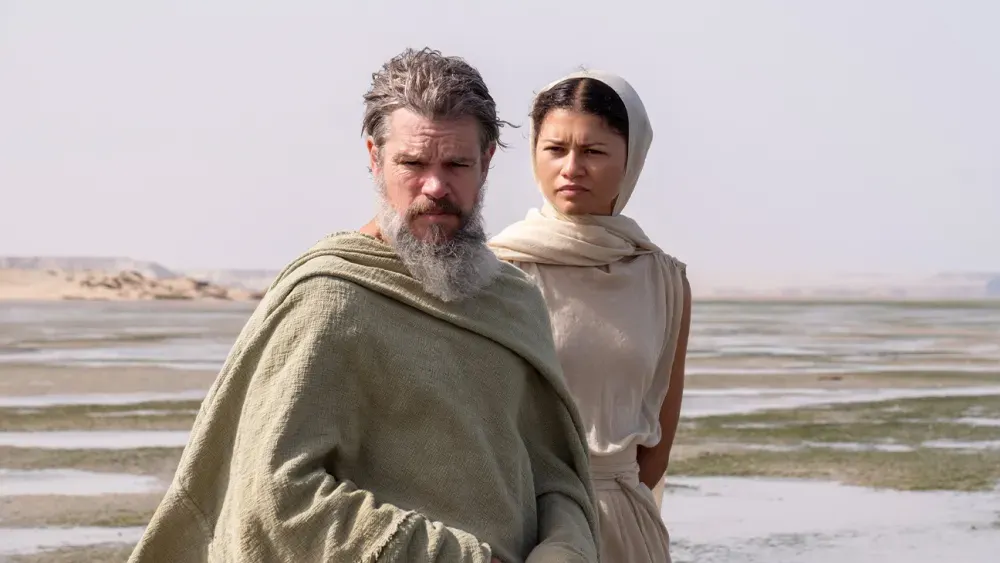
Yesterday, my lovely wife and I went on a movie date for our scheduled and mandatory viewing of Christopher Nolan’s The Odyssey. As I understand it, all Americans are now legally required to see this film. I thought it was quite good.
This isn’t a review, although before getting to a few reflections, I do want to mention one tiny nitpick. The climactic hand-to-hand combat sequence goes on long enough for the movie to almost become The Bourne Odyssey. That’s basically my only complaint.
Obviously, so many later stories sprang from this Homeric source that to list them all would consume my word count. The Odyssey also has some unforgettable supernatural elements, from the Cyclops to the Sirens to Scylla and Charybdis, the latter of which I mostly remember from “Wrapped Around Your Finger” by the Police. Nolan depicts all of them beautifully. What has stayed with me, though, isn’t the spectacle so much as the psychology.
I’m hardly the first to notice that The Odyssey can serve as a metaphor for trauma and reintegration. What interested me wasn’t so much the idea as one particular assumption it exposes: that healing means returning to a previous version of ourselves. This is a deeply understandable fantasy for anyone who has suffered and wishes they could somehow return to the person they were before the trauma, before the addiction, before the diagnosis, before the divorce, before the incarceration, before the grief, before whatever created the schism. That’s simply not possible. Experience changes us, often profoundly, which in Odysseus’ case means the man who originally set sail is fundamentally unrecoverable—not by Telemachus, not by Penelope, and not even by Odysseus himself.
There’s a fascinating stretch of the tale where Odysseus remains with Calypso for years. It’s easy to see him simply as her captive, but the relationship is more nuanced. Calypso offers him an existence outside ordinary time, insulated from history, grief, responsibility, and, in a key sense, from himself. For a while he accepts it, becoming complicit in his own forgetting. After so much pain and loss, who wouldn’t be tempted by the possibility of escaping it all? But forgetting turns out not to be the same thing as healing. His journey home truly begins only when he relinquishes the fantasy that he can escape what has happened instead of accepting and letting be. Only then is he free to become.
We’re not so different from Odysseus. When we suffer a traumatic experience, there’s often a period of mourning for the person we imagine we might have been had none of it happened. Such longing for a former self—while perfectly natural—can keep us from making a home in the life we have.
Even when external dangers recede, they leave powerful impressions that shape behavior. Vigilance becomes the default, cynicism feels like wisdom, and daily life revolves around anticipating threats and maintaining control. Often, these adaptations arise from trauma. They can just as easily grow out of ambition or years spent proving ourselves, until always demonstrating competence, always having the answer, or identifying as someone who has survived and overcome is no longer a choice.
These qualities aren’t inherently bad. Most arose for very good reasons and likely helped get us through difficult periods. Whether they remain our default way of moving through the world after the circumstances that required them have passed is another matter. There’s a difference between surviving something and continuing to live in survival mode. Long ordeals don’t simply teach us new behaviors; they make us gradually forget there are other ways of relating to others, as well as ourselves.
The capacities for openness, receptivity, trust, and possibility aren’t gone forever, but they can become difficult to recognize in ourselves after years of existing otherwise. Thankfully, it is possible to (re)discover that we are vaster than any strategy we took on to survive. Integration isn’t pretending the journey never happened. Nor is it limiting ourselves to the meanings made in the middle of crisis. It’s that those experiences no longer have the final say about who we get to be.
And so, Odysseus’ story isn’t just about getting back to Ithaca. It’s about accepting that the years have affected him in ways that cannot be undone. There is no road back to an unchanged self, but there may be a path beyond fear and reprisal. Such a journey could be epic; sometimes the long way home is the only way to arrive whole.