Tape Delay
The future arrived, but not exactly as advertised.

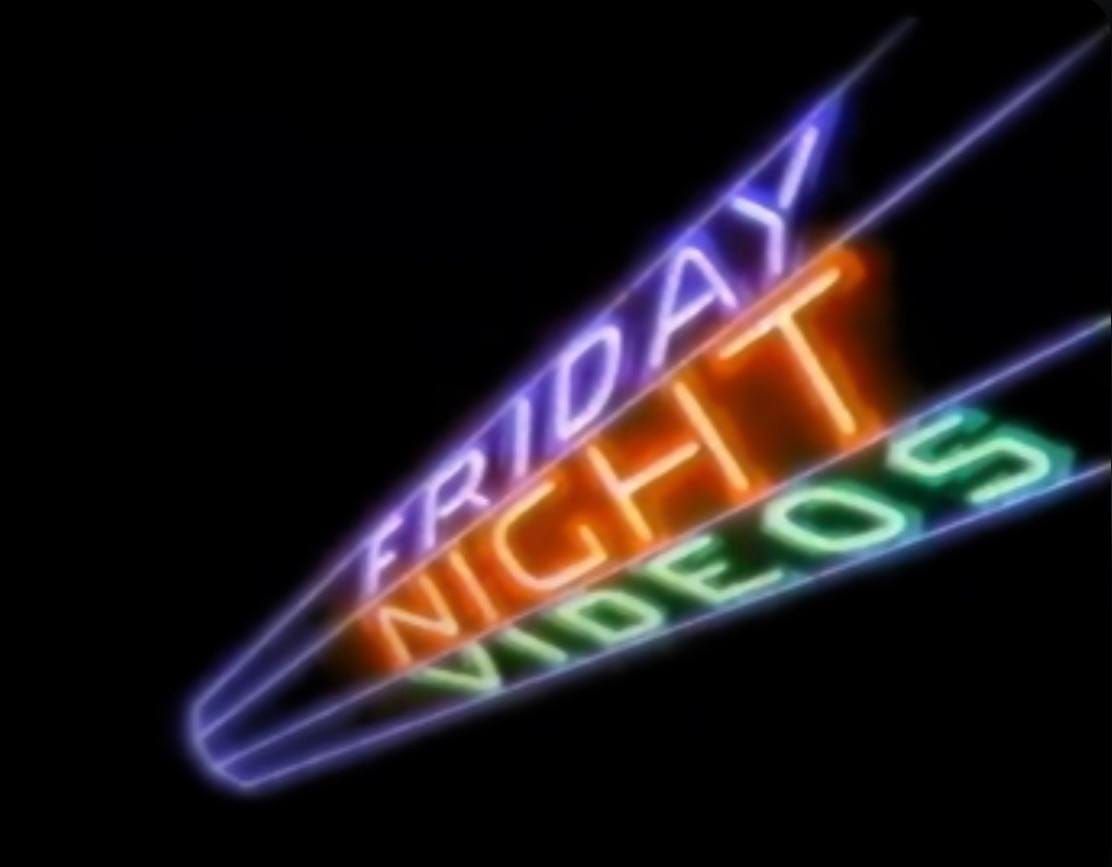
A few nights this past week, I was on the lookout for benevolent distraction and found it, along with some unintentional time travel. Specifically, I’ve been watching YouTube VHS dumps of Friday Night Videos broadcasts from 1983 and 1984.
It’s quite something to see them from the vantage point of 2026. Forget the manicured Stranger Things version of the Eighties. This is actual degraded video, complete with commercials, network promos, announcers and clunky transitions. Somebody recorded television onto a VHS tape more than 40 years ago, and miraculously that tape survived long enough to become a digital artifact in our current technological dystopia.
Friday Night Videos is significant because not everyone experienced the video revolution through MTV. In central Maine, MTV wasn’t even available on our cable system during those first few years. Music videos came through network television, often around midnight. You either stayed up or, in my case, learned to program the VCR and became the household technician capturing these precious transmissions for daylight viewing. (It was always important to leave enough tape in the tank for Saturday Night Live.)
The YouTube versions aren’t pristine historical documents, however. Algorithmic copyright detection forces uploaders to chop things out. An announcer might promise Michael Jackson, but “Billie Jean” never plays. Through some mysterious act of 21st-century copyright compliance, you get A Flock of Seagulls instead.
The past hasn’t merely deteriorated. The present is altering it to permit circulation through new channels. In that sense, these recordings resemble organic memory: partially intact, obviously incomplete, chronology scrambled, with occasional substitutions.
Still, there’s something delightful about not choosing. Today’s all-knowing algorithm (allegedly) offers infinite choice (allegedly) tailored to our preferences, but scarcity and serendipity once played a huge role in cultural discovery. The VHS dump serves up weird little surprises, like the ad for black denim jeans—a textile development apparently on par with the moon landing.
Which is why I’m as interested in the commercials as the sweet jams. Most of these music videos have been individually remastered and uploaded, detached from the context in which they first appeared. The gnarly videotape, by contrast, preserves the absurdly incidental connective tissue of the original broadcast.
And what connective tissue! The commercials are full of assumptions about where the culture thought it was heading. The VCR didn’t know which parts of 1983 would become historically relevant, which is why the crap between the programming is as revealing as the videos themselves.
The jingles are truly surreal. People got paid to make this stuff! They couldn’t simply type a lame prompt into Suno and generate it. Human beings had to painstakingly craft these brainworms, many of which remain lodged in my head.
Relentless military recruitment, including the inescapable “Be All You Can Be,” composed by jinglemeister Jake Holmes, who also wrote “Dazed and Confused,” famously appropriated by Jimmy Page for the Yardbirds and then Led Zeppelin. Q*bert and ColecoVision. Feminine products of varying absorbencies. Walkmans, wine coolers and over-the-counter amphetamine diet pills. A cornucopia of cringe.
Early-’80s culture was saturated with anticipation. Television itself was expanding, with announcers hyping the brand-new “Cable News Network” instead of simply saying “CNN.” Space exploration still seemed synonymous with human progress. Electronics were beginning to transform domestic life. Even the music looked futuristic. Underneath it all was a basic promise: technological progress plus consumer abundance plus American capitalism would deliver a brilliant future of ever-expanding possibility. (Checks notes, looks around.)
It’s weird to reexperience that optimism about what was coming, knowing what came next. The technology, after all, arrived and wildly exceeded the fantasy. The kid programming a VCR in the hinterlands would have been astonished by the Star Trek communicator/computer I carry in my pocket. TV no longer has a schedule. The tape never runs out. Most of recorded popular culture is instantly accessible. Yet for all that miraculous abundance, the returns have been pretty fucking grim.
Nevertheless, looking backward feels less nostalgic than nauseating. Things were emphatically not better then. We lived under the threat of nuclear annihilation, ensconced in Cold War paranoia and casual militarism. There was AIDS, rampant sexism, racism and homophobia. Kill a commie for mommy. Read the YouTube comments and you’ll find plenty of people my age wishing for a time machine. No thanks.
Yet here I am, using technology incomprehensible to my childhood self to watch a digitized magnetic tape while an automated copyright system reaches backward through history and replaces Madonna with Ronnie Milsap. Speaking of, the other night, “Any Day Now” led to General Public’s “Tenderness” and Dire Straits’ “Romeo and Juliet.” So much for getting any sleep.
I’m not pining for the world these tapes came from so much as fascinated by the future they thought was coming. We got the gadgets. Everything else turned out to be considerably more complicated.