Beyond Belief: Spiritual Rupture and Post Traumatic Growth
When a belief system breaks, the grief is real and the conflict runs deep. But rupture can also be the beginning of something more authentic.

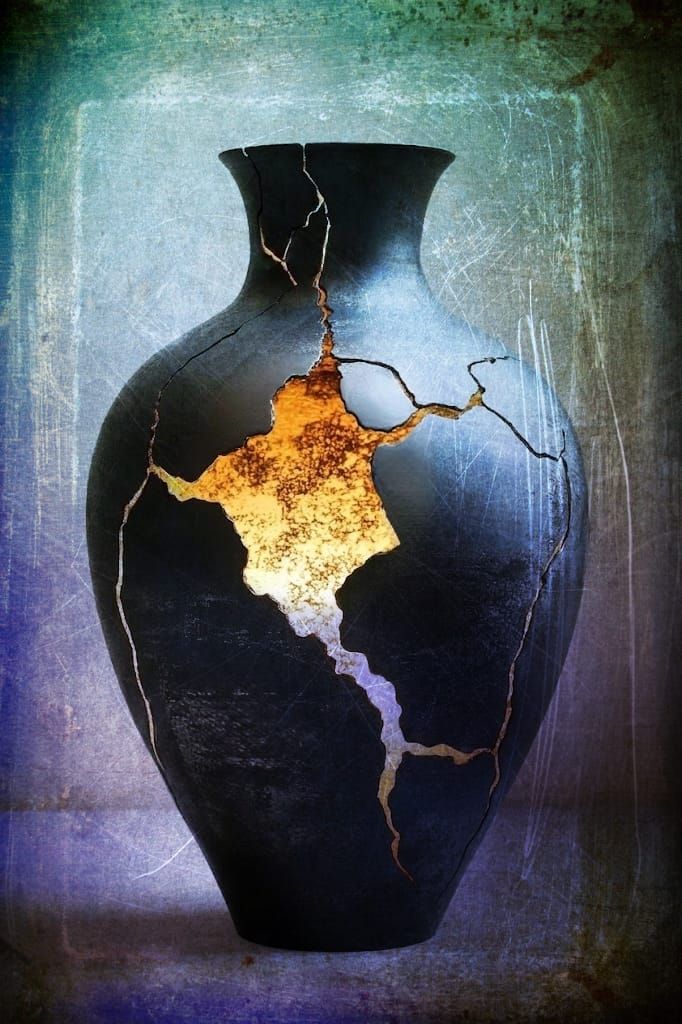
For a lot of people, religion is an orienting structure for what is safe, what is dangerous, why we exist, what happens when we die, and what we deserve while we’re alive. We may not have chosen it exactly—perhaps it came through family and social life, or the ambient values of the dominant culture. We may be deeply invested in it, pay it little mind, or even rebel against it. Nevertheless, when an underlying belief system gets knocked, it can cause a schism in how we relate to the world and ourselves.
For those who grew up in very religious households, the first break may come through the discovery that the world is bigger than their limited experience. In encountering new people, ideas, and ways of being, there is a pull toward wider horizons and away from previously held identities. This expansion can be enlivening—even intoxicating—though the grief and loss underneath it is easily bypassed through overindulgence in what was previously forbidden.
Institutional religions typically don’t welcome that. Most are not built for dogmatic modification or accommodation, and can be restrictive and punitive about coloring outside the lines. This is in part why certain religious groups are hostile to secular education.
Other times the rupture is the result of wounding. Victimization within religious settings happens frequently, perpetrated by those who are supposed to be trustworthy. And so, a particular kind of inner schism emerges. Ingrained veneration of spiritual authority and the lived experience of betrayal cannot coexist. This can lead to a complete rejection not only of the previously held belief system, but spirituality generally, thus foreclosing the possibility of healing through personally authentic and non-coercive expressions.
Then there’s the theologies themselves, which contain their own interpretations and contradictions. It is common for even those who haven’t experienced religious trauma to question how an all-good, all-powerful, ultimately loving creator could also permit suffering. For victims, it’s hardly a philosophical argument. Their wounds have their own testimony, and they may not want to be reconciled with a God who should have intervened and did not.
We hear a lot about religious faith, but it’s useful to separate that from belief. Faith, in my experience, can abide not knowing. Belief is dependent on certainty. And when something threatens, harms, or destroys our beliefs, we suffer.
When beliefs cannot be restored, the inner conflict doesn’t disappear. It gets compartmentalized and polarized. Trauma-informed care frameworks identify this as a meaning-making impasse: the embedded belief and the situational reality are in opposition, and neither yields. This results in uncomfortable, even unbearable tension.
We may not expect to grieve a rejected belief system, especially one that hurt us. But the loss is real—of community, of certainty, of a universe organized around our being safe. Layered over that grief is guilt, and over the guilt, fear. We can walk away from a theology of damnation and still feel the harsh binaries within.
Integration isn’t returning to something we can’t go back to, nor is it mere replacement—finding a new container and filling it with the same unfulfilled needs. It’s more like allowing the wounded parts to be met by an open, non-judgmental heart that also holds the original longing for meaning and belonging.
Here there is the possibility of positive evolution. What researchers call “post-traumatic growth” captures the markers of that re-emergence: an increased appreciation for simply being alive; an awareness of possibilities that didn’t seem available from within the previous orientation; new ways of relating to people across difference and tradition; a personal strength that comes from having survived the rupture; and spirituality that isn’t assumed, but authentic and connected to core values.
This is a process with no specific timetable. It benefits from shared understanding in spaces that allow us to be seen and accepted. And the most meaningful space is that which we find within ourselves.