No Country for Weird Old Men
Jim Jarmusch is applying for French citizenship. David Cronenberg clings to Canadian funding. David Lynch saw the writing on the wall twenty years ago. Are the dinosaurs of indie cinema going extinct?

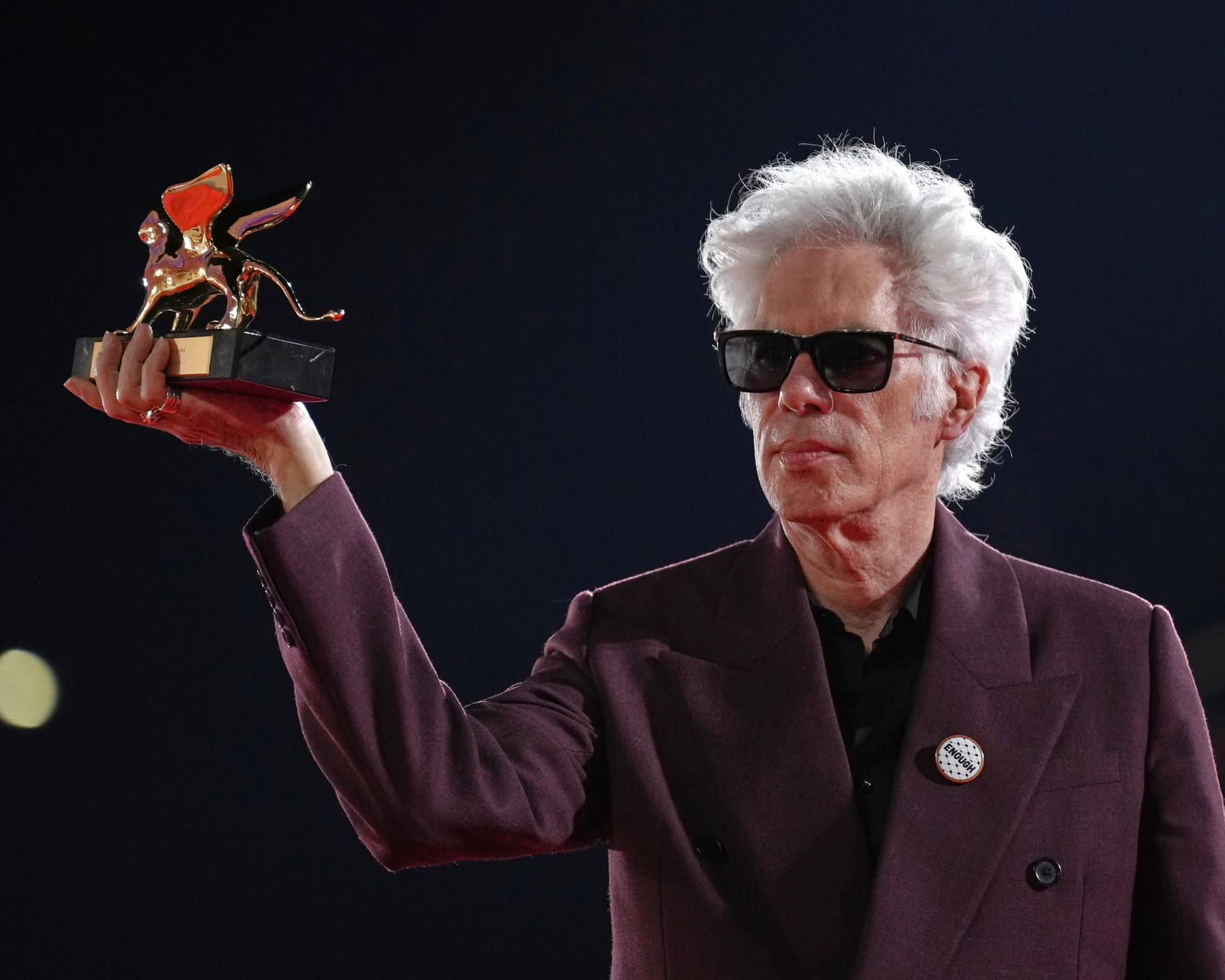
When Jim Jarmusch won the top prize at the Venice Film Festival for his new film Father Mother Sister Brother, he dropped something of a bombshell: he was applying for French citizenship. One imagines part of the reason is that America is a tough place to be an artist right now, even for those with a celebrated oeuvre. That was confirmed in an Interview Magazine conversation with fellow filmmaker David Cronenberg, where Jarmusch said, “in America, I’m an indie filmmaker, and I’m happy to be that. But in France, I’m an actual film director.”
A big part of the problem seems to be economic, to the extent that filmmaking icons of the late twentieth century are no longer able to make it work here. David Lynch—who enters the queue behind Bowie of Deaths I Haven’t Entirely Processed—is a good example. I’m still sore that Netflix rejected what would have been his final projects—Snootworld, an animated fairy tale co-written with Caroline Thompson, and Unrecorded Night, a 25-episode spiritual successor to Mulholland Drive.
Lynch saw the writing on the wall twenty years ago. Inland Empire came out in 2006, shot on consumer-grade digital handheld—not even high resolution—and self-financed as a co-production between the United States, France, and Poland, with much of it filmed in Łódź. Lynch’s entire career was a series of workarounds. Even he ran out of them in the end.
David Cronenberg offers an interesting contrast. In that same Interview Magazine conversation—which took place right after Lynch’s death—Cronenberg mentioned that he wouldn’t be able to make movies without Canadian government funding. But times are changing in the Land of the Maple Leaf. “France might end up being the last bastion, having such a diamond-hard cinema history,” he said. The director of The Fly putting the bug in Jarmusch’s ear is a suitably freaky couplet.
I’m not saying underground, weird, fringe cinema is dead. But it’s no doubt migrating and mutating. Besides manic surrealist Yorgos Lanthimos, I think of Coralie Fargeat, who is French—and therefore has access to government support—making deranged body horror (The Substance) and femsploitation vengeance fare (Revenge) that turns the male gaze into a kind of grotesque mind virus. Jane Schoenbrun drifts through Lynchian dreamworlds with movies like I Saw the TV Glow and We’re All Going to the World’s Fair—not movies I personally love, but evidence that such impulses persist.
If the golden age of—let’s face it, predominantly white and male—“auteur” cinema is coming to an end, so be it. That myth is probably well past its sell-by date anyway. But the next move for the mainstream is truly barf-bag worthy: major IP owners licensing their characters to AI platforms for fan-generated video slop. What already exists is abjectly awful yet attracts gushing commenters championing its “creators” over anything made by actual filmmakers. Disney briefly had such an arrangement with OpenAI’s Sora before it collapsed earlier this year. But the idea is only waiting to be reanimated like a dead actor rendered as uncanny pixels.
I’ll let Ryan Broderick from Garbage Day handle the critique of short-form “clips.”
My original concern was about preservation and access—would the films survive this brutal, market-driven digital shift? Now, I wonder whether anyone will still know how to watch long-form, challenging cinema. The perceptual muscles required to appreciate Inland Empire or Dead Ringers or Down By Law could become completely atrophied from disuse—trained out of us by an endless feed of prompted slop.
The films will likely remain. I’m just not sure about the audience.