Asha, Avatar
Twelve thousand songs across eight decades. Three generations of Bollywood stars mouthed her music onscreen. Asha Bhosle was a multiverse.

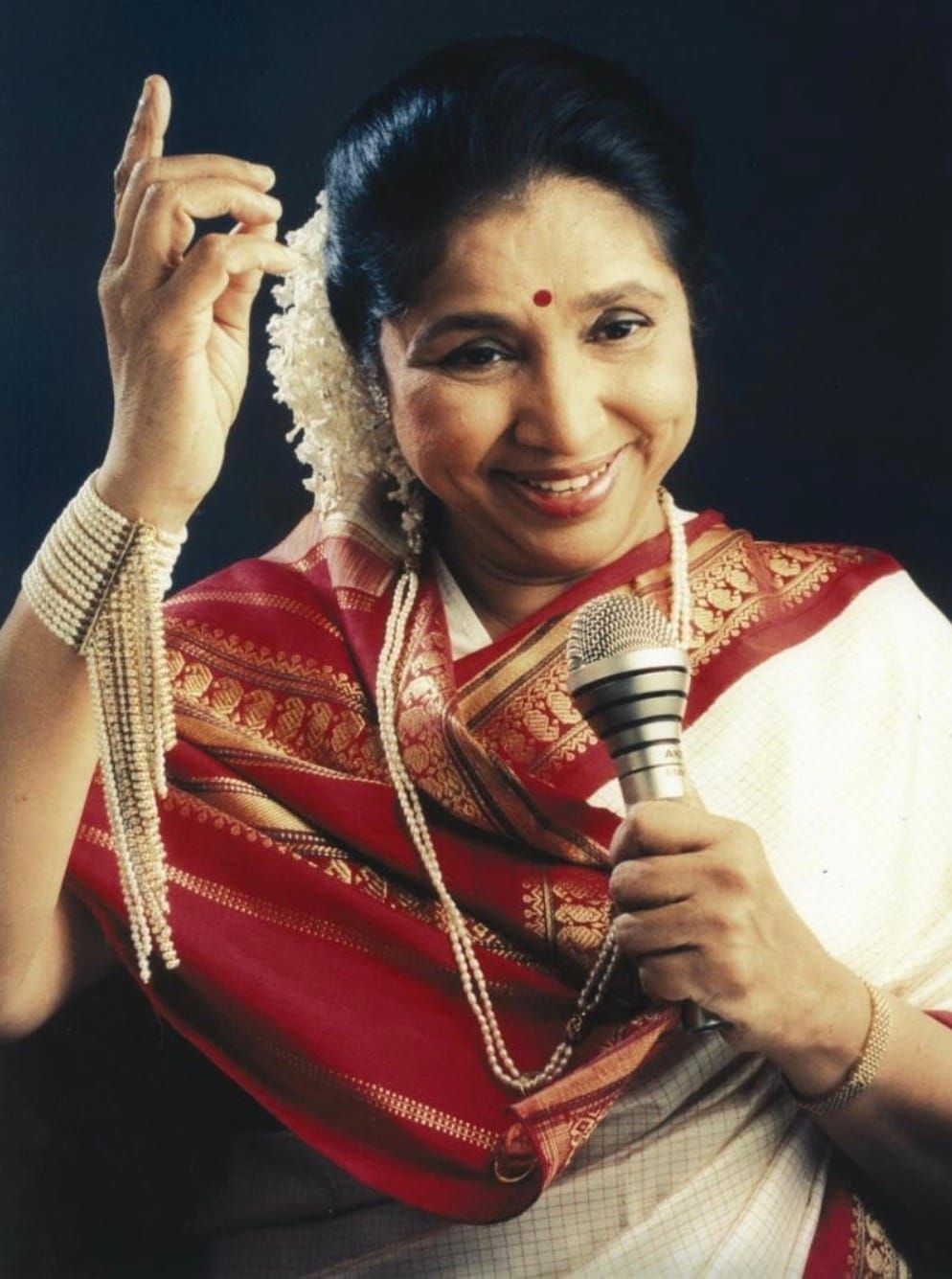
In 1998, Cornershop had a hit that I was supposed to be too cool for. “Brimful of Asha” had three chords, an infernally catchy chorus, and was the sort of song destined to end up on a Volkswagen ad inside of a year. I loved it anyway, and I loved it more because I already knew who Asha was. Indian music had been in my listening rotation for a while—from Ravi Shankar to Shakti to Talvin Singh—so when Tjinder Singh plainly intoned “everybody needs a bosom for a pillow” and named Asha Bhosle in the same breath as Mohammed Rafi and Lata Mangeshkar, I knew it was more than a novelty track. It was a hymn.
Asha Bhosle died on April 12, at age 92. She is said to have recorded twelve thousand songs, which would make her the most recorded artist in history, a fact you can read in her obituaries and then watch evaporate from Western musical memory like late summer rain.
Asha’s career and artistry have no real Anglo-American equivalent. In the Bollywood production system, songs aren’t recorded by the onscreen talent. They’re tracked by professional singers whose voices are then lip-synced by the stars. The audience knows this and doesn’t care, because even within the most seamless pairings, each performance stands on its own. In fact, some playback singers became as or more famous than the actors who mouthed their music onscreen.
Asha was one of them. Her aforementioned older sister Lata, who died in 2022, was another. The two of them were pillars of Hindi cinema for most of the 20th century, delivering vocal transmissions across the decades as it grew into the largest film industry on earth.
The greatest playback singers function like avatars in the very traditions Bollywood borrows for mythological grandeur. English speakers may know the word from the James Cameron films, The Last Airbender, or video games where you construct a digital body to inhabit. There, it tends to mean a chosen form, a costume, or mere vessel. The original sense is richer and deeper. In Sanskrit, avatāra means “descent”—a deity entering a particular form and completely embodying it, rather than simply wearing it as a mask. When Vishnu appears as Rama, Rama is fully Vishnu, and fully Rama, at the same time.
Bollywood brought that divine flow to movie production. Like a mythopoetic nesting egg, an actor playing a goddess—herself an object of devotion—mimes the singing of a musical devi, received by a devotional public who venerate each aspect individually and as a unity. Asha provided the voice for at least three generations of these descents, across genres that ranged from realist drama to on-screen incarnations.
Asha Bhosle recorded for eight decades. She sang in twenty languages. She pushed the envelope of what was considered acceptable in performance. She sang ghazals and qawwalis and bhajans and even disco. Her voice was the nectar that empowered the Bollywood pantheon.
Cornershop got this. “Brimful of Asha” is danceable devotion. I imagine it descending onto vinyl—a 45, natch—so it can be held, played, returned to, kept under the pillow (or a bosom). After all, everybody needs one.