Collective Memory vs. Performative Skepticism

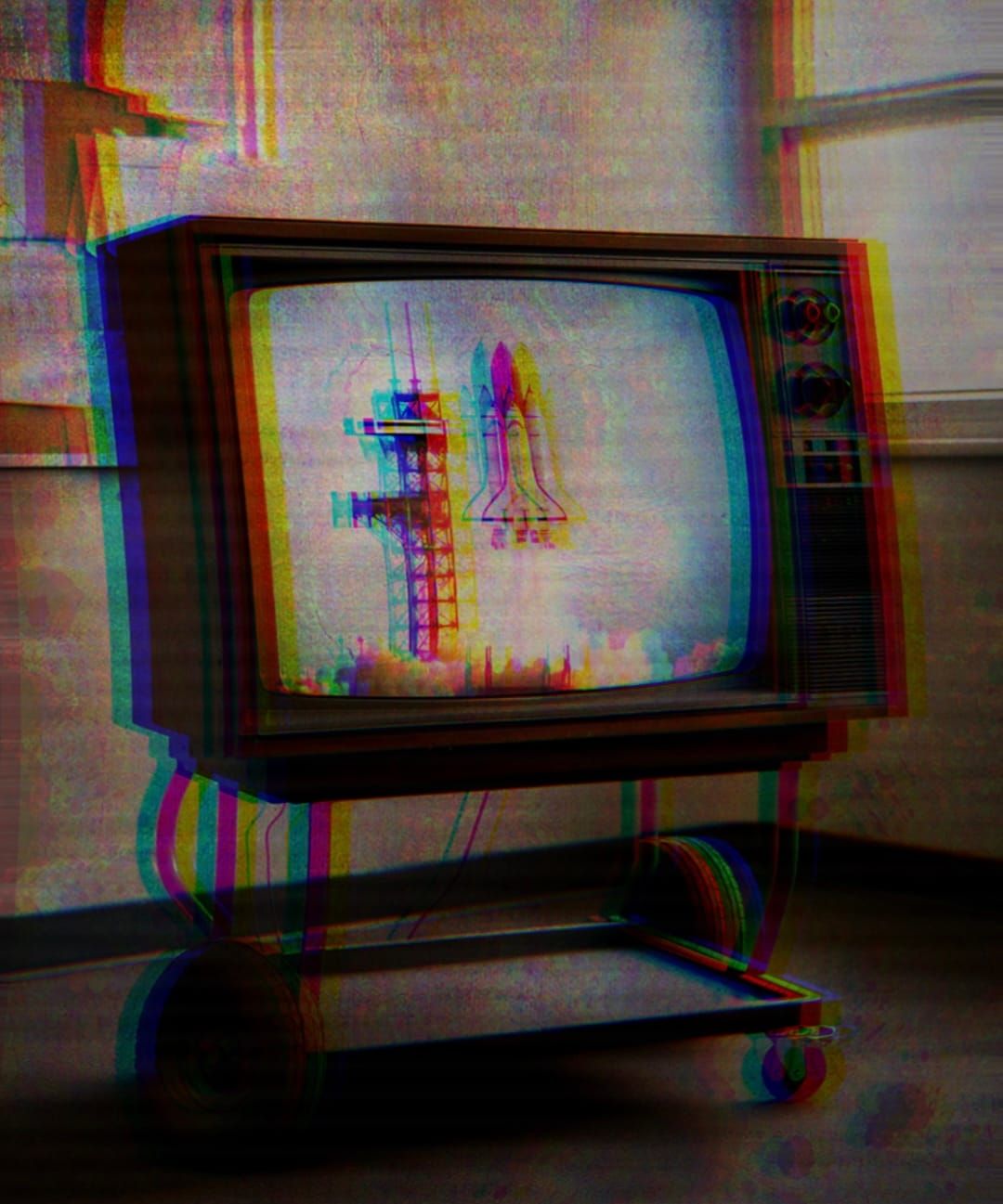
With the recent launch of the crewed spacecraft Artemis—destined for a rendezvous with the moon—we suddenly have national attention turned toward the American space program in a way that hasn’t happened in a while. And whenever something like this occurs, I notice a discomfort I have to sit with before I can locate its source.
Today it landed right in my lap in the form of a social media post claiming that almost no one actually watched the Challenger disaster live. The predictable outrage followed. Obviously, I think the assertion is wrong—I most certainly did watch it live—but I’m also interested in what that wrongness means beyond the fact-correction-and-outrage cycle.
The claim collapses almost immediately, because Christa McAuliffe—the New Hampshire schoolteacher selected as the first civilian to fly aboard the Space Shuttle—was the whole focus. The Teacher in Space program was a deliberate effort to make this launch a shared civic experience for American schoolchildren. Many of us remember the television carts wheeled down the hall into our classes. We can hear the squeaky wheels. We can place ourselves exactly in the room. The common memory here is evidence of the event’s reach, not mass delusion.
What’s happening with the original post is something I’d call performative skepticism. It takes energy from the Mandela Effect, which holds that widely shared experience becomes suspect precisely because it’s widely shared. There’s a real phenomenon underneath that framework; human memory is genuinely reconstructive and fallible. But here, it’s weaponized into a reflexive contrarianism that inverts the logic entirely.
When this reflex meets collective trauma, it stops functioning like skepticism and becomes more like gaslighting.
Because that’s what this is—collective trauma. A room full of children bearing witness to something terrible in real time, built up for months as a triumphant occasion we were all invited to share in together. The sensory specificity of that memory—the classroom, the cart, the precise moment of comprehension that something had gone catastrophically wrong—all had a real impact on a generation of kids.
And then the footage ran on a loop for days. The Challenger disaster happened at an early moment in the history of what we might call the “media-as-trauma-loop”—an emerging cable-era practice of returning obsessively to catastrophic imagery until it’s burned into the nervous system of an entire society.
Of course, the body doesn’t distinguish cleanly between first witness and the fifth replay. Kids who hadn’t watched live got the image anyway, inescapably. This is the same mechanism that 9/11 would later perfect. The debunkers may be conflating two things that are both true and not mutually exclusive: “I watched it live” and “I have seen this image many, many times.”
I’ve also been thinking about all of this through the lens of For All Mankind, the Apple TV series I only recently started watching—it’s in its fifth season now, and worth the patience it demands. The show’s premise is that the Soviets land on the moon first, keeping America locked in a sustained space race rather than declaring victory and moving on. What makes it compelling as a thought experiment isn’t the space hardware but the downstream social consequences—the argument, made across multiple seasons, that the collective response to a significant event does more to shape history than the event itself. How a culture decides to metabolize a moment determines what that moment becomes.
That framing could apply to Challenger. The decision to make McAuliffe’s flight a national classroom event predetermined how the trauma would be experienced, by whom, and at what scale. There’s a McLuhan-esque quality here—the Teacher in Space program as a message about American optimism and technological confidence, delivered through the classroom television, and then catastrophically interrupted; the catastrophe inseparably fused with the medium and meaning.
For All Mankind suggests that how we’re conditioned to receive an experience and what we do with what has been witnessed aren’t always in alignment.
Still, how we bear witness together matters. It shapes not just our narratives but our capacity to heal from painful or difficult experiences. Unfortunately, that requires more integrity and honesty than the online discourse typically affords. That, too, is on us.