Middle Management: Notes on the Threshold

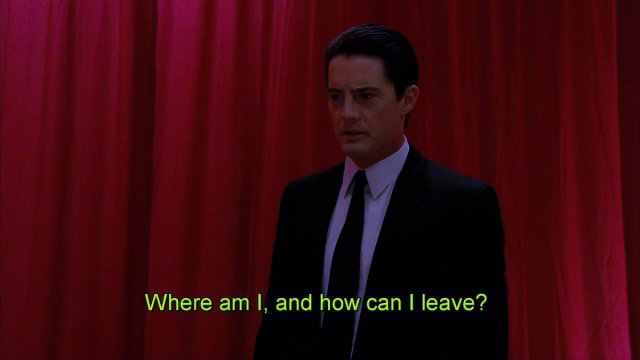
There’s a particular kind of exhaustion that arrives not at the end of something hard but somewhere in the middle. You’ve been in the shit long enough for the shock to have worn off but the light at the end of the tunnel remains an inky maw. The adrenaline that carried you through the first weeks has evaporated. And the sweet souls who offered early support have wandered back to their lives. But you’re still here, doing the unglamorous work of continuing—getting up, making coffee, answering email, all while carrying something invisible to nearly everybody else.
Most people know some version of this. Maybe it’s a rapid dissolution of identity due to the end of a relationship, or a diagnosis that divides your life into before and after. A persistent illness, final estrangement, loss of faith—some key aspect of yourself you’d spent years fashioning that no longer fits for reasons that seem impossible to articulate even if anyone bothered to ask.
These are all thresholds of one kind or another. And often, we cross them alone—without acknowledgment of what is being lost or gained—even though there may be others around. And so the experience remains a private mystery with no ceremony to mark it and no community to hold it.
Historically, human societies had containers for these kinds of things. Even in the 21st century, we still have some—weddings, funerals, bar mitzvahs, gender reveal parties—but we seem to have misplaced a few essentials. In indigenous cultures, when someone crossed a threshold, family and community elders bore witness and held the individual while they moved through it. “Rites of passage,” anthropologists have long called it—separation from the old identity, a liminal in-between where nothing is stable, before a new way emerges. The community’s job is to help you understand and endure this process.
Most of us don’t have anything like that. We move through these seasons of loss and bewilderment largely alone, in a culture that would prefer we fix our shit quick and get back to being productive. Even our psychotherapists don’t always have a frame for this kind of suffering. We lack a community or container that lets us know that how we feel has connective tissue, and that we will not be here forever.
John of the Cross called this kind of experience the “dark night of the soul”—big hit, you might’ve heard of it—not depression, exactly, but something more like abandonment. He came to this understanding under the mentorship of Saint Teresa of Ávila, the Carmelite nun and mystic who saw the stripping-away not as punishment but as preparation for a higher unity.
During the dark night, all your consolations are snuffed out, not to be relit. That darkness, both of them realized, is purifying. Other traditions may see it as an emptying, where the self relinquishes its attachment to self. Either way, you can’t think or strategize your way out of it. You can only abide through it.
The Tibetan traditions of my heart call it bardo—what arises wherever one thing has ended and another has not yet begun. There’s more to it than that, but what bardo and the dark night point to is that transformations always involve loss; a shedding of self-conceptions held prior to entering.
Putting a fine point on what may or may not be on the “other side” of such experiences is not something I’m interested in doing. It would be mind, regardless of appearance. What I’m getting at is that you’re not having a malfunction. Well, maybe you are, but it doesn’t belong to you entirely. Which is precisely why marking transition matters—being witnessed in the threshold, nurtured into new ways of being. This is ancient work. You shouldn’t have to do it alone.