The Common Infrastructure of Survival

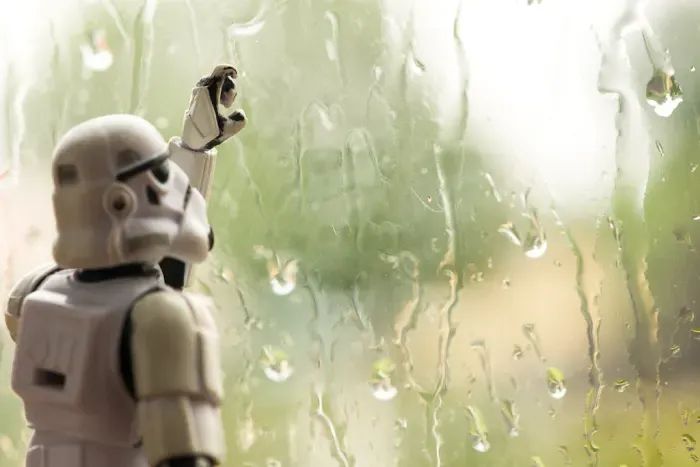
The shows still happen. You even go to a few. And the BBQs, the sports events, the kids’ birthdays. You show up, make plans, and from the outside, things seem more or less intact. But there’s a disconnect from the experiences of your life that feels isolating and somehow too amorphous to name.
And frankly, the name is a little weird: anhedonia.
It means the blunting of positive affect, the slow draining of feeling from what once brought us joy or at least some degree of contentment. The Big Blank. Just hanging on like the ash of Shelley Duvall’s cigarette in The Shining.
Though it can feel quite lonely, this is not an entirely private condition. We are, as a society, exhibiting the symptom profile of complex PTSD. The accumulated, unresolved weight of pandemic, political rupture, climate dread, and economic instability has done what sustained, unprocessed trauma always does to a nervous system. And when the nervous system in question belongs to an entire culture, the symptoms are climatized, with the burdens borne collectively and individually.
Underneath the proximate causes is something more structural, and that structure is getting wobbly. Extractive global capitalism didn’t invent human suffering, but it created the specific conditions in which collective recovery becomes nearly impossible, systematically dismantling the communal structures through which humans have always processed grief and restored meaning.
The supply shocks, inflation, and ambient precarity aren’t mere happenstance. They’re the predictable output of a system that converts every crisis into an extraction opportunity while ignoring the psycho-emotional and social costs. We are living inside the accumulated interest on decades of that arrangement.
Complex PTSD presents in clusters. The intrusion and avoidance symptoms get the most attention, but there’s a third cluster that may be the most pervasive right now, precisely because it’s the least dramatic: detachment from the people and things you love, hopelessness about the future, difficulty feeling positive emotion, negative narratives about self and world that don’t feel like distortions. Add to that memory gaps and fogginess indicating trauma not as past event but an ever-present reality.
Collective trauma activates whatever individual trauma history is already present, raising the overall threat load until older wounds reopen. Disruptions are distributed differently across communities that nominally share them, because nobody undergoes environmental stress as a blank slate. Which means experiences of collective trauma are carried by individuals whose capacity to absorb and process may already be diminished.
Likewise, the conditions for resilience and recovery are communal. You can’t think or practice your way back to aliveness alone. Anhedonia is a relational injury, and its remedy is relational, not as special program or event, but as the patient work of building connections through which activated nervous systems can gradually return to mutually reinforcing homeostasis.
That’s what community care actually means at its most demanding: not showing up when things are good, but creating sustained, accountable tending that doesn’t require people to perform recovery before they’re eligible to receive it. In my view, this is where pastoral work is heading, away from institutional settings toward something more organic: the neighborhood in the original sense, the web of mutual obligation that extractive capitalism has spent decades convincing us was naive or inefficient.
It’s not naive. It is the infrastructure of survival, and we are feeling its absence in our bodies. It’s time to nurture something different in ourselves and our communities. It doesn’t have to be big and flashy. We’ve had enough of that. Scale does not determine value. And remember: every act of genuine care is a form of restoration.