The Kids Are Into Jazz Again. But Do They Know That?

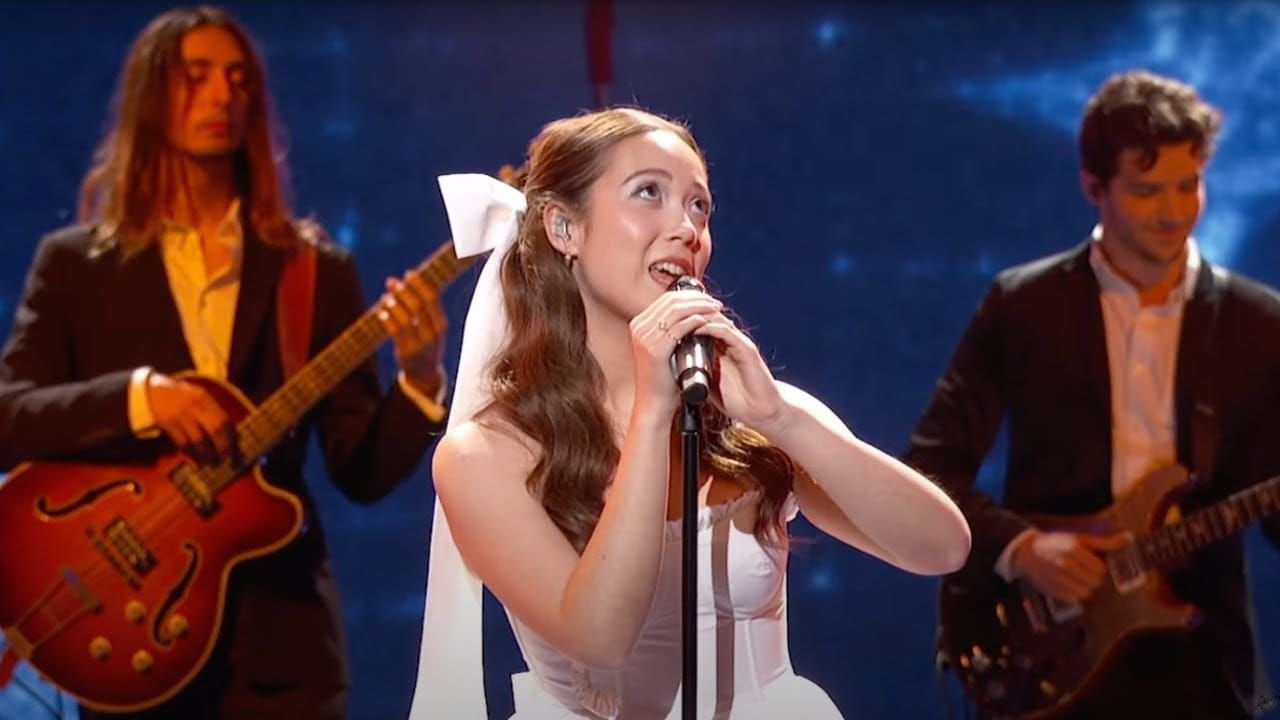
A couple of years ago, I was at a show with our teenage daughter to see Laufey—the twentysomething Icelandic-Chinese orchestral jazz-pop artist who is, improbably, a global star. The couple thousand kids at this sold-out performance knew every single word of her stylish, big band-flavored torch songs. The sound was terrific; one of the best-mixed shows I’ve heard in my life. Laufey’s backing musicians were turn-on-a-dime good, and so was she—on several instruments and vocals, no less. Our kid was thrilled.
That same daughter plays in jazz band at school, in addition to other ensembles. She’s great, and she performs alongside peers who are startlingly good. It’s been wild to watch her independently make her way through vintage and contemporary jazz and bossa, along with the usual indie and pop stuff. The kids embrace it all, whether it’s relatively recent or close to a century old.
Naturally, I’ve pondered how the younger generations became friendly towards jazz and adjacent music. We could probably start with the band Snarky Puppy. My theory is that Millennials who had been in the jam scene picked up a Steely Dan habit—the harmonic sophistication, the polyrhythmic inflections, the bleached funk—and Snarky Puppy scratched an unnamed itch. To me, they don’t sound terribly different from some of the corny fusion acts of yesteryear, like Yellowjackets or Spyro Gyra. Yet somehow Snarky Puppy aren’t seen as dad jazz by their younger fans, who probably don’t even care that the group has five Grammys.
Bands that a generation prior would’ve been playing standard issue jam-funk are now explicitly jazz and/or fusion oriented. Some lean r&b, some lean experimental, some may even lean metal. Music program kids—trained players who can actually execute challenging material—once again have something to aspire to that isn’t strictly conservatory or slumming it in indie rock. A new pipeline between serious musicianship and contemporary relevance has emerged.
Zoomers seem to have taken all of this as a license to get really weird. This generation of music obsessives has colossal ears and chops to burn. In terms of jazz influences, Thundercat is probably the gateway—flamboyantly technical, a bass shredder who anchored and animated Kendrick Lamar’s cerebral hip-hop and got sky high with Flying Lotus on the way to establishing his own brand of deeply psychedelic, progressive jazz fusion.
Then you have groups like Toronto’s post-everything BADBADNOTGOOD, who built an audience among people who probably wouldn’t self-identify as jazz listeners. Expansive composer and keyboardist Alfa Mist started out as a rapper. Sudan Archives drapes virtuoso violin in R&B, world and electrofunk. Geordie Greep formerly led the avant-rock band Black Midi—explosive maximalists nobody would mistake for smooth—before going solo. His solo debut, The New Sound, is essentially a Brazilian-flavored Steely Dan album kitted out Mad Max style. The “new jazz” can be quite feral.
That intensity extends to the spiritual side. Both Kamasi Washington and Shabaka Hutchings more or less came from jazz, which has long stretched toward the transcendent. Each gets their share of hype, but the ambition is real, rooted in a lineage running directly through Alice Coltrane and Pharaoh Sanders. Brandee Younger’s harp playing situates Coltrane’s celestial vibrations within sultry cosmopolitan grooves. Pakistani-born Arooj Aftab brings midnight blue vocals to enveloping desert jazz, while London-by-way-of-Belgium’s Nala Sinephro saturates her compositions with lucid ambience. Spiritual jazz is full spectrum.
Rather than submitting to a museum piece afterlife, jazz has been atomized, fractally disseminated, reabsorbed, and recombined. New generations are weaving their own threads without needing to call it jazz; some of them are composing and performing at levels their predecessors would find remarkable. Maybe even Miles Davis.
But probably not.